
FTC Disclosure:This post contains affiliate links.We’re independently supported by our readers and we may earn a commission when you buy through our links.

A diaper is the one purchase you will repeat more than any other in the first two years, and the one you will think about least until something goes wrong at 3am. The differences between a good diaper and a mediocre one are not visible on a shelf: they show up as a wet crib sheet, a red mark around the waist, or a run to the store at the wrong time.
What actually separates the five sets below is fit range, how the leak protection is built, and how much of the construction is aimed at skin rather than absorbency claims. Two of the five models in our earlier version had been replaced on Amazon by newer pack sizes with different ASINs, and one listing in the old article pointed two different products at the same item, so this is a full rebuild rather than a light edit.
We kept the list arranged the way a baby grows: newborn sizes first, then overnight, then the active crawling and walking stage, then the larger sizes. If you only want one recommendation, read the first entry and stop.
At a Glance: Our Top Picks
| Award | Diaper | Best For | Why It Stands Out |
|---|---|---|---|
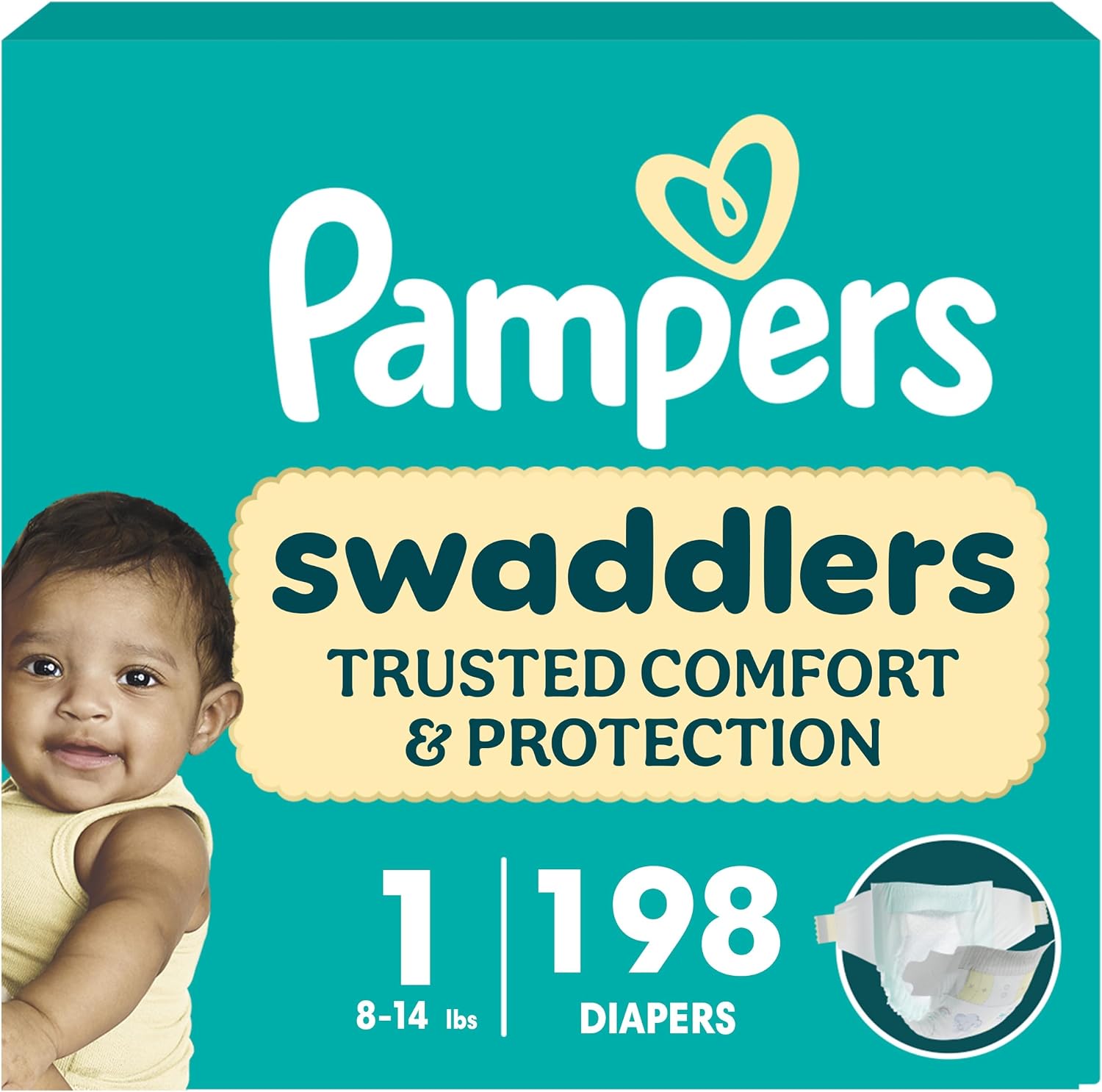
| TOP PICK | Pampers Swaddlers, Size 1 | The first month at home | An all-around leak guard plus a blowout barrier, in a newborn fit most parents already know |
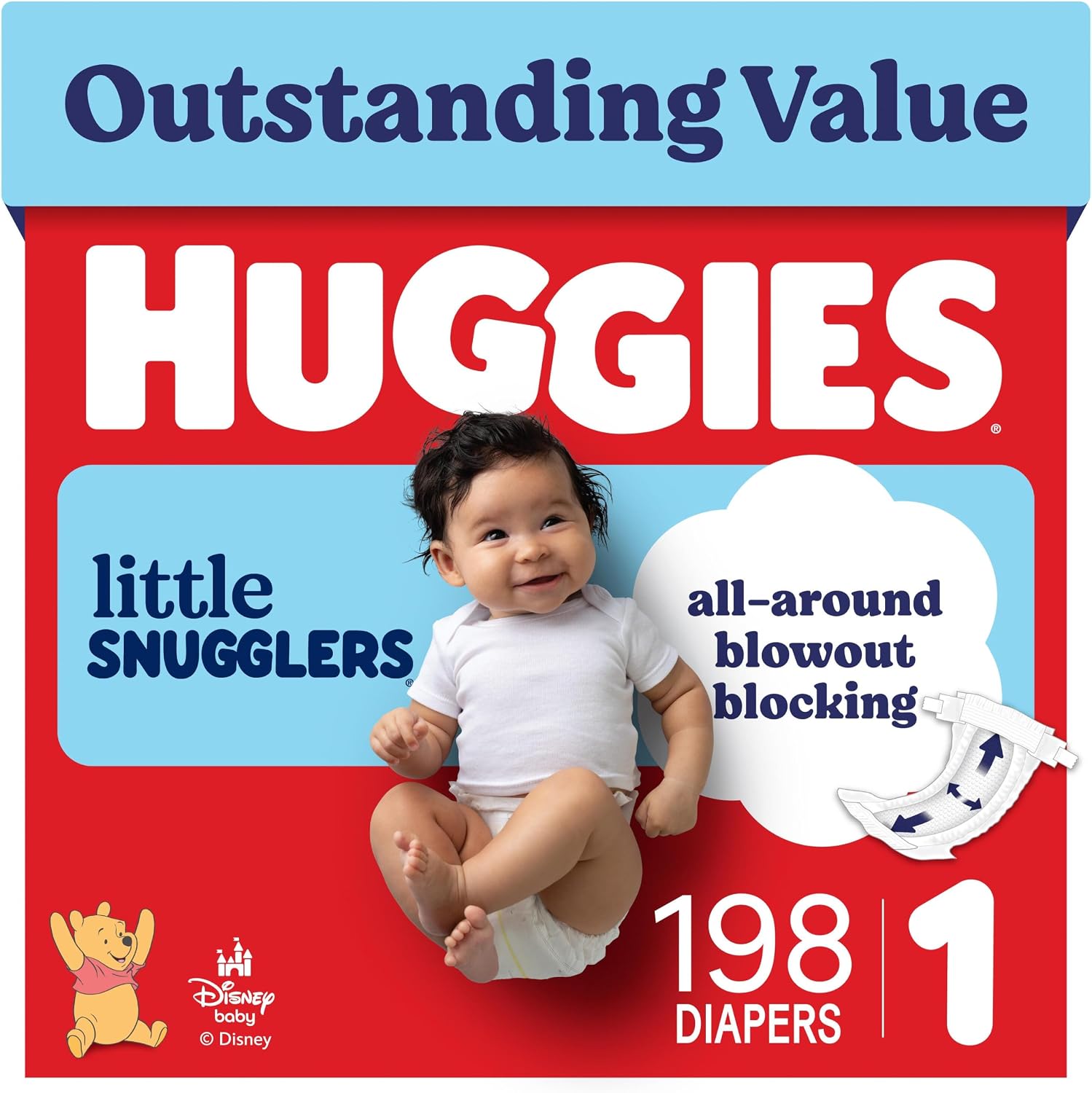
| BEST NEWBORN FIT | Huggies Little Snugglers, Size 1 | Babies who leak out the back | Front and back blowout blockers, plus a FastAbsorb layer that pulls wetness off the skin |
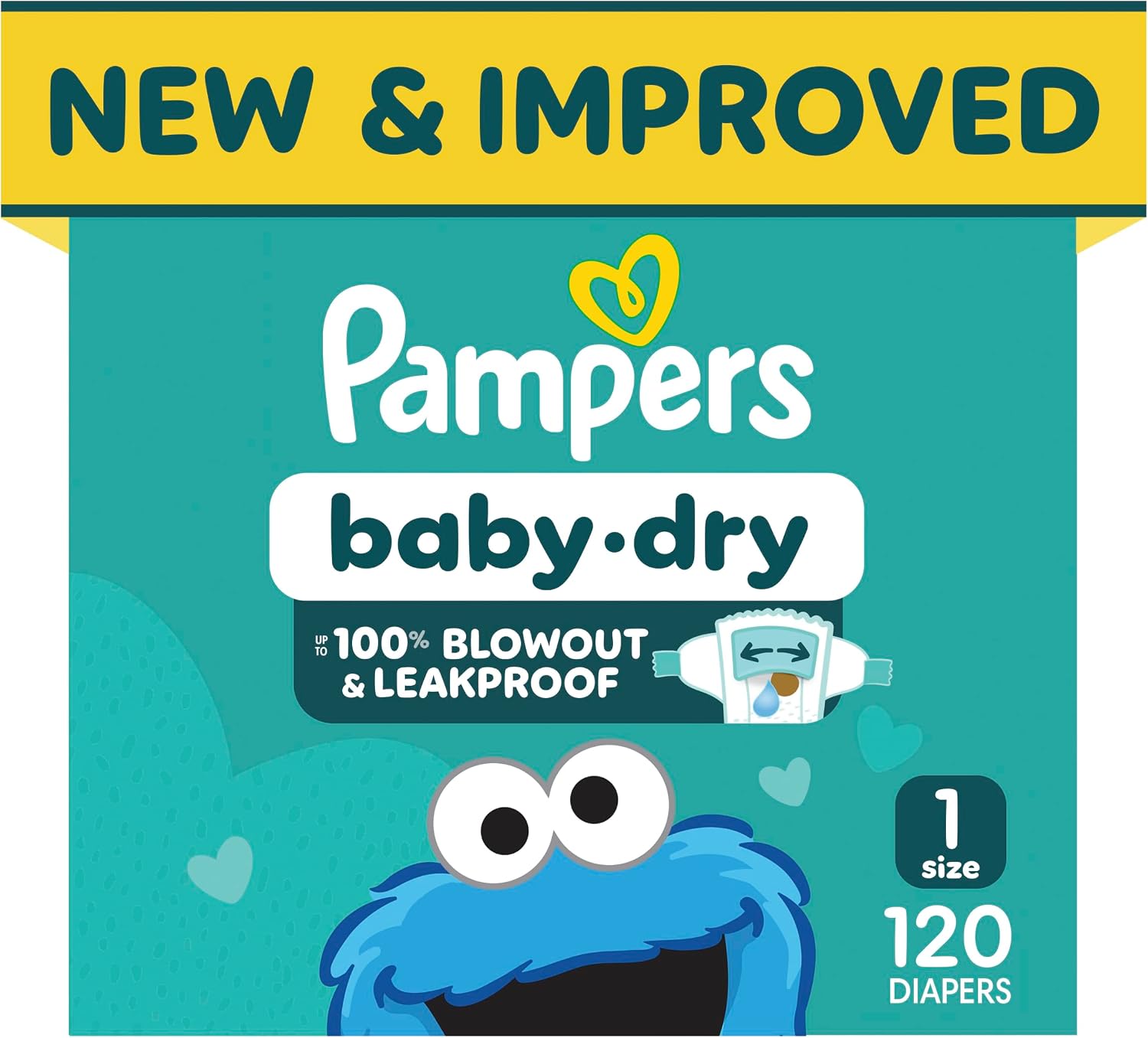
| BEST OVERNIGHT | Pampers Baby Dry Ultra Cushiony, Size 1 | Long stretches between changes | Cushioned core built around one job: holding on until morning |
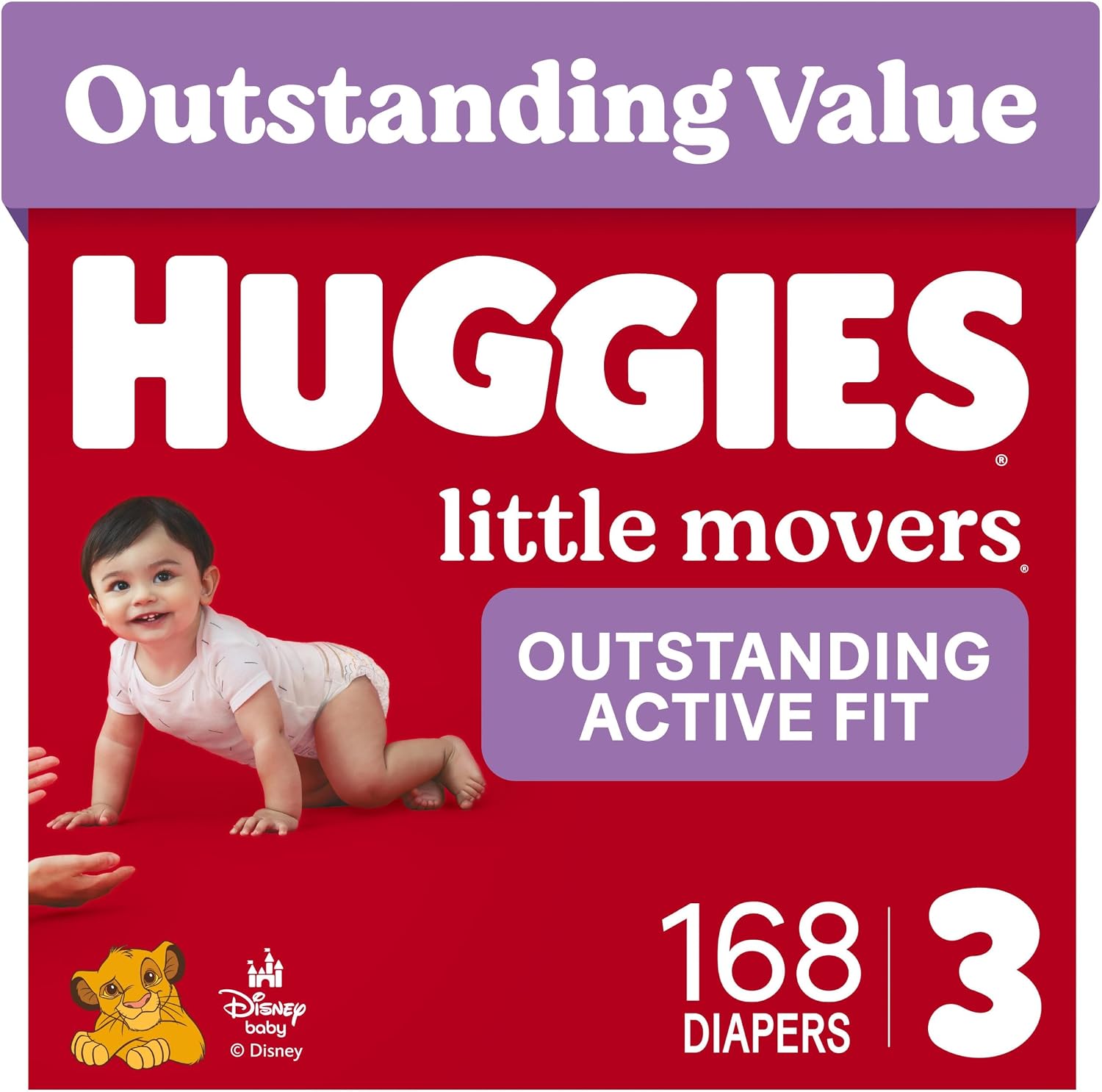
| BEST FOR MOVERS | Huggies Little Movers, Size 3 | Crawling, climbing, walking | Double grip strips and a waistband that stays put when your baby does not |
| BEST VALUE | Mama Bear Gentle Touch, Size 6 | Big toddlers, big packs | House-brand pricing with OEKO-TEX certification and a real wetness indicator |
How the Five Compare
Sizes and counts vary by pack, so the table below lines up the five on the things that decide whether they work for your baby: which weight range they fit, how protection is built, and what the materials claim.
| Diaper | Size & Count | Protection | Fit | Skin |
|---|---|---|---|---|
| Pampers Swaddlers | Size 1, 198 ct | All-Around LeakGuard, Blowout Barrier | 8-14 lb | Fragrance free, hypoallergenic |
| Huggies Little Snugglers | Size 1, 198 ct | Front and back blowout blocker | 8-14 lb | Fragrance free, hypoallergenic |
| Pampers Baby Dry | Size 1, 120 ct | Ultra cushiony, up to 100% leakproof | 8-14 lb | Soft outer cover |
| Huggies Little Movers | Size 3, 168 ct | Double grip strips, DryTouch liner | 16-28 lb | Fragrance free, no parabens |
| Mama Bear Gentle Touch | Size 6, 108 ct | Fullprotect channeled core | 35+ lb | OEKO-TEX certified, no perfumes |
The 5 Best Diapers in 2026
1. Pampers Swaddlers, Size 1
Pampers · Size 1 (8-14 lb) · 198 count · Fragrance free
BOTTOM LINE: the set we would buy for the first month, because the leak protection is built the way a newborn actually leaks.
Swaddlers put three layers of defence on the same diaper: an All-Around LeakGuard at the leg cuffs, a Blowout Barrier at the waist, and an absorbent core underneath. For a baby still on a liquid diet, that combination is the whole game. It is also the model most maternity wards hand out, which means the fit is already tuned to newborns rather than to a generic size chart.
The materials claim is specific rather than decorative: fragrance free, hypoallergenic, and free of parabens, elemental chlorine and latex, with dermatological approval from the Skin Health Alliance. If your baby has reacted to a scented diaper, this is the version to try instead of hunting for a specialty brand.
The 198-count pack is roughly a month of changes in the newborn stage, which matters more than it sounds: running out at 2am is a specific kind of misery. The trade-off is that Swaddlers are a premium line, so a family going through two packs a month may want to mix in a cheaper daytime option.
KEY SPECS
Size: 1, fits 8-14 lb
Count: 198 per pack
Protection: All-Around LeakGuard, Blowout Barrier, absorbent core
Materials: fragrance free, hypoallergenic, no parabens, chlorine or latex
Certification: dermatologically approved by the Skin Health Alliance
PROS
✓ Leak guard and blowout barrier on the same diaper
✓ Fragrance free and latex free for reactive skin
✓ A month of changes in one box
✓ Fit tuned to newborns, not a generic chart
CONS
○ Premium line, so it adds up over two packs a month
○ Only covers the newborn stage
○ Packaging varies between batches
2. Huggies Little Snugglers, Size 1
Huggies · Size 1 (8-14 lb) · 198 count (6 packs of 33)
BOTTOM LINE: the pick if your baby is the type who leaks up the back, because the blowout blocker sits at both ends rather than only at the legs.
Huggies builds Little Snugglers around a pocketed back waistband, and on sizes 1 and 2 the brand adds a front blocker as well. In real use that is what stops the up-the-back failure that ends with a full outfit change, and it is the single most common complaint parents have about cheaper diapers.
The FastAbsorb system sits directly against the skin and pulls wetness inward on contact, and the liner is designed to keep the surface feeling drier between changes. The rest of the construction is equally deliberate: a curved shape with a stretchy waistband for a gentle fit around the tummy, which is where a rigid diaper leaves red marks on a newborn.
Materials are fragrance free and hypoallergenic, without parabens, elemental chlorine, lotions, phthalates or natural rubber latex. Huggies markets itself as the only leading national brand entirely fragrance free, and for a baby with a history of nappy rash that claim is worth more than an extra absorbency layer.
KEY SPECS
Size: 1, fits 8-14 lb
Count: 198 (6 packs of 33)
Protection: front and back blowout blockers, up to 100% leakproof
Materials: fragrance free, hypoallergenic, no parabens, chlorine, phthalates or latex
Fit: curved shape, stretchy waistband
PROS
✓ Blowout blockers at the front and the back
✓ FastAbsorb liner keeps the surface drier
✓ Curved, stretchy fit around a newborn tummy
✓ Entirely fragrance free
CONS
○ Six separate packs makes storage awkward
○ Pricier than a store brand for daytime use
○ Front blocker only on the smallest sizes
3. Pampers Baby Dry Ultra Cushiony, Size 1
Pampers · Size 1 (8-14 lb) · 120 count · Night-time core
BOTTOM LINE: the overnight diaper. If your baby sleeps longer than four hours, this is what stops the 4am sheet change.
Baby Dry is Pampers’ long-wear line, and the difference from Swaddlers is in the core rather than the features list: an ultra cushioned absorbent layer rated for up to 100% leakproof protection, built to hold a larger volume over a longer interval. For anyone whose baby has started sleeping in stretches, that is the practical difference between one wake-up and three.
The softer, cushier feel is a genuine trade rather than marketing: the cushioning improves comfort against the skin and reduces the plasticky stiffness that cheaper overnight diapers develop when wet. In exchange you get slightly more bulk between the legs than the thinner Swaddlers, which is noticeable on a newborn still in the first weeks.
The 120-count pack is smaller than the 198-count boxes above, which makes it a sensible second purchase rather than a month-one purchase: buy a box of Swaddlers for daytime and a box of these for nights, and you have the two situations covered without doubling up on one.
KEY SPECS
Size: 1, fits 8-14 lb
Count: 120 per pack
Protection: up to 100% leakproof, cushioned absorbent core
Design: Sesame Street character prints, varies by batch
Best used: overnight and long naps
PROS
✓ Built for long intervals, not frequent changes
✓ Cushioned core stays comfortable when wet
✓ Rated up to 100% leakproof
✓ Pairs well as the night half of a two-box setup
CONS
○ Bulkier between the legs than Swaddlers
○ Smaller pack size than the newborn boxes
○ No fragrance-free positioning as strong as the Swaddlers line
4. Huggies Little Movers, Size 3
Huggies · Size 3 (16-28 lb) · 168 count (6 packs of 28)
BOTTOM LINE: the diaper for the stage where your baby no longer stays where you put them, with grip strips that hold position through crawling and climbing.
Once a baby starts moving, most leaks stop coming from absorbency and start coming from gaps: the diaper shifts at the leg, the waistband slides down, and the seal opens at exactly the wrong moment. Little Movers answers with double grip strips that lock the waistband in place and a curved fit designed to eliminate gaps at the legs and the waist while the baby is in motion.
The DryTouch liner is rated to lock away 99% of wetness, which keeps the surface dry during the longer intervals that come with a toddler who does not want to be changed. Huggies describes this as its best-fitting diaper, and the size 3 range of 16 to 28 lb covers the window when most babies are between crawling and running.
Like the Snugglers line it is fragrance free and made without parabens, so switching between the two as your baby grows does not introduce a new scent or a new material to reactive skin. The 168-count box in six packs is enough to get through a long stretch without reordering, at a stage when you are changing fewer diapers per day but buying them in larger sizes.
KEY SPECS
Size: 3, fits 16-28 lb
Count: 168 (6 packs of 28)
Protection: double grip strips, waistband seal, DryTouch liner
Materials: fragrance free, no parabens
Stage: crawling, climbing and early walking
PROS
✓ Grip strips hold the waistband through movement
✓ Liner rated to lock away 99% of wetness
✓ Curved fit closes gaps at legs and waist
✓ Same fragrance-free materials as the newborn line
CONS
○ Only useful once your baby is past 16 lb
○ Six packs take up shelf space
○ Pull-up styles take over at this age for some families
5. Mama Bear Gentle Touch, Size 6
Amazon Brand · Size 6 (35+ lb) · 108 count (4 packs of 27)
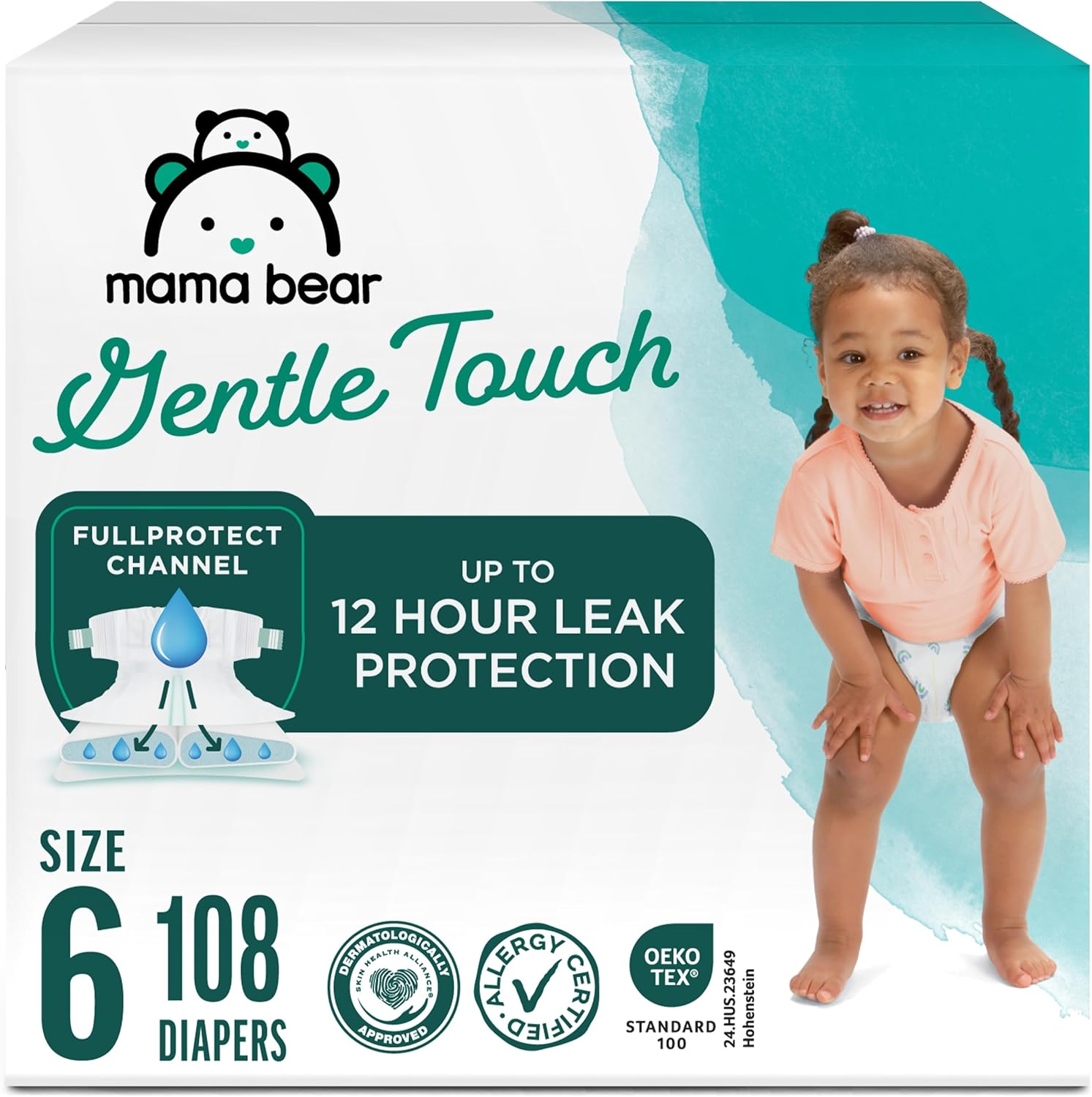
BOTTOM LINE: the one to buy in bulk for a toddler, because the certification list is longer than the brand name suggests and the pack price per change is the lowest here.
Mama Bear is Amazon’s house brand, and the assumption that a house brand means a stripped-down product does not survive a look at the label. Gentle Touch carries OEKO-TEX Standard 100 certification, tested against more than a thousand chemicals, plus Skin Health Alliance approval and AllergyCertified status. That is a stricter paper trail than most premium lines publish.
The construction is straightforward and does the job: a Fullprotect channeled core rated for up to twelve hours of leak protection, a curved shape with a stretchy waistband, tri-grip tabs for a secure closure, and a wetness indicator that turns colour so you are not guessing whether a change is due. At size 6 the audience is a toddler over 35 lb, which is exactly where per-diaper cost starts to matter most.
The materials are formulated without perfumes, lotions, parabens or phthalates, and the bags use 20% post-consumer recycled material. What you give up is the last increment of softness and the brand’s newborn-specific features: there is no blowout barrier at the waist, and the fit is aimed at a child rather than a newborn.
KEY SPECS
Size: 6, fits 35 lb and up
Count: 108 (4 packs of 27)
Protection: Fullprotect channeled core, up to 12 hours
Materials: no perfumes, lotions, parabens or phthalates
Certification: OEKO-TEX Standard 100, Skin Health Alliance, AllergyCertified
Extras: wetness indicator, tri-grip tabs, recycled packaging
PROS
✓ OEKO-TEX, Skin Health Alliance and AllergyCertified
✓ Wetness indicator takes the guesswork out of changes
✓ Twelve-hour core for night use in big sizes
✓ Lowest cost per change of the five
CONS
○ No waist blowout barrier
○ Not as soft as the premium lines
○ Only worth it in the larger sizes
How We Chose
We started from the five listings in our earlier version and checked each one against Amazon. Two Huggies models had been replaced by newer pack sizes with new ASINs, and the old article pointed two different product descriptions at the same item, so the list was rebuilt around what is actually shipping now rather than updated in place.
Every model here was confirmed in stock, and the sizes and weight ranges quoted come from the current listings rather than from memory. Where a brand makes a claim that is its own marketing, such as a parental choice survey, we describe it as the brand’s claim instead of repeating it as fact.
The five were then ordered around actual use cases rather than brand prestige: a newborn daytime diaper, a newborn diaper for babies who leak out of the back, an overnight core, a fit for the crawling stage, and a large-size option that keeps the cost per change down. Nothing is here because it looked good on a product page.
Why Trust Pliizy?
We are not paid by the brands in this article and we do not accept placement fees. The picks follow the fit ranges and construction details published on each listing, and the drawbacks listed under each entry are the ones that show up in owner reviews rather than the ones that are convenient to mention.
Every listing was checked as in stock on Amazon US at the time of writing, and links in this article are affiliate links. If you buy through one we may earn a commission at no extra cost to you, and it does not change which diapers make the list.
A Guide on Diapers
Diapers exist to keep a baby dry when the body cannot yet control what comes out of it. In the first two years that is a constant job, and the differences between products come down to a handful of design decisions you can check before you buy rather than after the first leak.
Brand heritage, and what it actually buys you
A diaper is a product that sits against skin around the clock, so it is not somewhere to gamble on an unknown seller. Established brands publish test standards, hold safety certifications and run consistent manufacturing, which is why their packs cost more than an unbranded equivalent.
That said, heritage is not the only signal. Amazon’s own Mama Bear line carries OEKO-TEX Standard 100, Skin Health Alliance approval and AllergyCertified status, which is a more concrete paper trail than most legacy brands publish. The thing to avoid is a listing with no certifications, no brand page and stock photographs that look reused: that is where counterfeit and gray-market stock tends to appear.
Absorbing power and how leaks actually happen
Absorbency is usually quoted as hours or as a leakproof percentage, and both are marketing-friendly ways of saying the core holds a certain volume. The more useful question is where the diaper fails when it does fail. In the newborn stage, most leaks come out of the back waistband, which is why front and back blowout blockers matter more than an extra gram of pulp.
Once a baby starts crawling, the failure mode changes: the diaper shifts and a gap opens at the leg cuff. That is a fit problem, and it is solved by grip strips, elastic leg cuffs and a waistband that stays where it was put, not by a thicker core. Matching the diaper to the stage is more effective than paying for the most absorbent model on the shelf.
Wetness indicators and why they matter at night
A wetness indicator is a stripe that changes colour when the diaper is wet. On a newborn being changed ten times a day it saves you from unbuttoning a sleeping baby to check, and overnight it tells you whether the 3am change is actually necessary.
Not every line includes one: it is standard on Mama Bear Gentle Touch and common on value lines, and it is usually absent from the premium newborn ranges where the assumption is that you are changing on a schedule anyway. If you are doing night feeds in the dark, it is worth checking for before you buy a large box.
Stretch and where a diaper should be snug
A diaper needs to be tight enough to seal and loose enough not to press. The waistband and the leg cuffs are the two places where that balance shows up: a stretchy waistband follows a tummy that expands after a feed, while a rigid one leaves a red mark within an hour.
Check for red marks behind the knees and around the waist at each change. Persistent marks mean the diaper is too small or the fit is wrong for the shape of your baby, and prolonged pressure in that area is uncomfortable in a way a baby cannot tell you about. Sizing up is usually the right answer before switching brands.
Baby size and the size chart trap
Diaper sizes overlap more than clothing sizes do, and the weight ranges on the box are guides rather than rules. A baby at the top of size 1 can often wear size 2 comfortably, and a baby at the bottom of size 3 may still be better off in size 2. The practical test is simple: leaks at the leg mean size up, red marks at the waist mean the fit is too tight.
Buying one small pack before committing to a large box is worth the extra trip. Every brand cuts its pattern slightly differently, and a box of 198 is a long commitment to a fit your baby may not agree with.
Skin sensitivity and what to look for on the label
Newborn skin is thin and reacts quickly, and nappy rash is usually a combination of moisture, friction and an irritant rather than one single cause. On the label, the terms worth checking are fragrance free, hypoallergenic, and free of parabens, elemental chlorine and natural rubber latex. Dermatological approval from a body such as the Skin Health Alliance is a stronger signal than the word gentle on its own.
If redness appears after switching products, change back and give the skin a few days before trying something else, one variable at a time. If it persists or spreads, that is a question for your pediatrician rather than a reason to buy another brand.
Conclusion
There is no universal best diaper, because the right answer depends on your baby’s shape, the stage they are in and how often you are changing them. What you can do is buy one small pack of each candidate, watch where leaks happen, and let that decide the large box. Where a medical need exists, such as diagnosed sensitive skin, the certification list is worth paying for; where it does not, a certified house brand like Mama Bear does the same job for a toddler at a lower cost per change.
Frequently Asked Questions
How many diapers should I expect to go through in the newborn stage?
Newborns are changed somewhere in the region of eight to twelve times a day in the first weeks, which is why the 198-count packs are sized the way they are. That number drops steadily as your baby grows, so a box that lasts a month at size 1 will last considerably longer at size 3.
Is size 1 the same as a newborn diaper?
Most lines run a separate newborn size below size 1. Size 1 generally covers 8 to 14 lb, so a baby born at average weight will usually start in newborn and move to size 1 within a few weeks. Buying a large box of size 1 before the birth is usually a safe bet, a large box of newborn is usually not.
Do I need a separate diaper for overnight?
Only once your baby starts sleeping in longer stretches. Before that you are changing at every feed anyway, so a premium overnight core is wasted. Once stretches pass four hours, a long-wear line like Pampers Baby Dry or Mama Bear Gentle Touch earns its place, because the alternative is a sheet change in the middle of the night.
Are store brands like Mama Bear actually safe to use?
The certification is what matters, not the name on the bag. Mama Bear Gentle Touch carries OEKO-TEX Standard 100, Skin Health Alliance approval and AllergyCertified status, and is formulated without perfumes, lotions, parabens or phthalates. That is a comparable or stricter paper trail than several premium lines publish.
How do I know when to size up?
The clearest signals are leaks at the leg cuff, a diaper that sits lower than it used to, and red marks or indentations around the waist and thighs. Any of the three means size up. The weight ranges on the box overlap deliberately, so a baby near the top of one size is usually comfortable in the next one up.


