
FTC Disclosure:This post contains affiliate links.We’re independently supported by our readers and we may earn a commission when you buy through our links.

Compression socks became a mainstream purchase for two reasons: long flights and long shifts. Both leave the same symptom — heavy, tight, tired legs by the end of the day — and both are the reason this category now sells in multi-packs to people who do not think of themselves as patients.
The confusion is in the numbers. A sock labelled 15-20 mmHg and a sock labelled 20-30 mmHg look nearly identical and behave very differently. The first is a comfortable everyday support sock that most people can wear for a full day. The second is a firmer garment intended for shorter, more targeted use, and it is noticeably harder to put on. Buying the higher number because it sounds stronger is the single most common mistake in the category.
This guide is organised by brand rather than by a ranked single sock, because each brand here occupies a different corner of the market: firmer sport and clinical support, multi-pack value, pharmacy-brand familiarity, soft everyday support, and the footless calf sleeve that runners and gym users prefer. Each brand is represented by one current product sold on Amazon, so you can read the size chart and the pressure rating in one place. We do not print prices or star ratings; both change too fast to stay accurate.
At a Glance: The Five Brands
| Award | Brand | Signature Product | Best For |
|---|---|---|---|
| Top Pick | Physix Gear | 20-30 mmHg Knee High | Nurses, frequent flyers, running |
| Best Multipack | FITRELL | 3 Pairs 20-30 mmHg | Rotating stock without sorting laundry |
| Best Household Name | Dr. Scholl’s | Graduated Knee High | Buyers who want a known pharmacy brand |
| Best Everyday 15-20 | CHARMKING | 3 Pairs 15-20 mmHg | First pair, all-day comfort, pregnancy |
| Best Calf Sleeve | BLITZU | Footless Calf Sleeve | Runners and gym work without foot pressure |
Brand-by-Brand Comparison
Compression garments are defined by pressure, not by fabric. The table groups the five brands by the pressure level they are built around, the fit they use and the use case they are designed for, so the choice becomes a choice of function rather than a choice of colour.
| Brand | Pressure Level | Fit Character | Pack Format | Standout Trait |
|---|---|---|---|---|
| Physix Gear | 20-30 mmHg | Firm, athletic | Single or 2-pack | Firm sport and clinical support |
| FITRELL | 20-30 mmHg | Firm, standard | 3 pairs | Multipack at a firm level |
| Dr. Scholl’s | Graduated 15-20 | Smooth, uniform | Single or multi | Pharmacy-brand familiarity |
| CHARMKING | 15-20 mmHg | Soft, relaxed | 3 pairs | All-day wear without pressure |
| BLITZU | Calf sleeve | Snug, footless | Single pair | No foot compression at all |
1. Physix Gear — The Firm All-Rounder
Best for nurses, frequent flyers and runners who want real support rather than a soft hug.
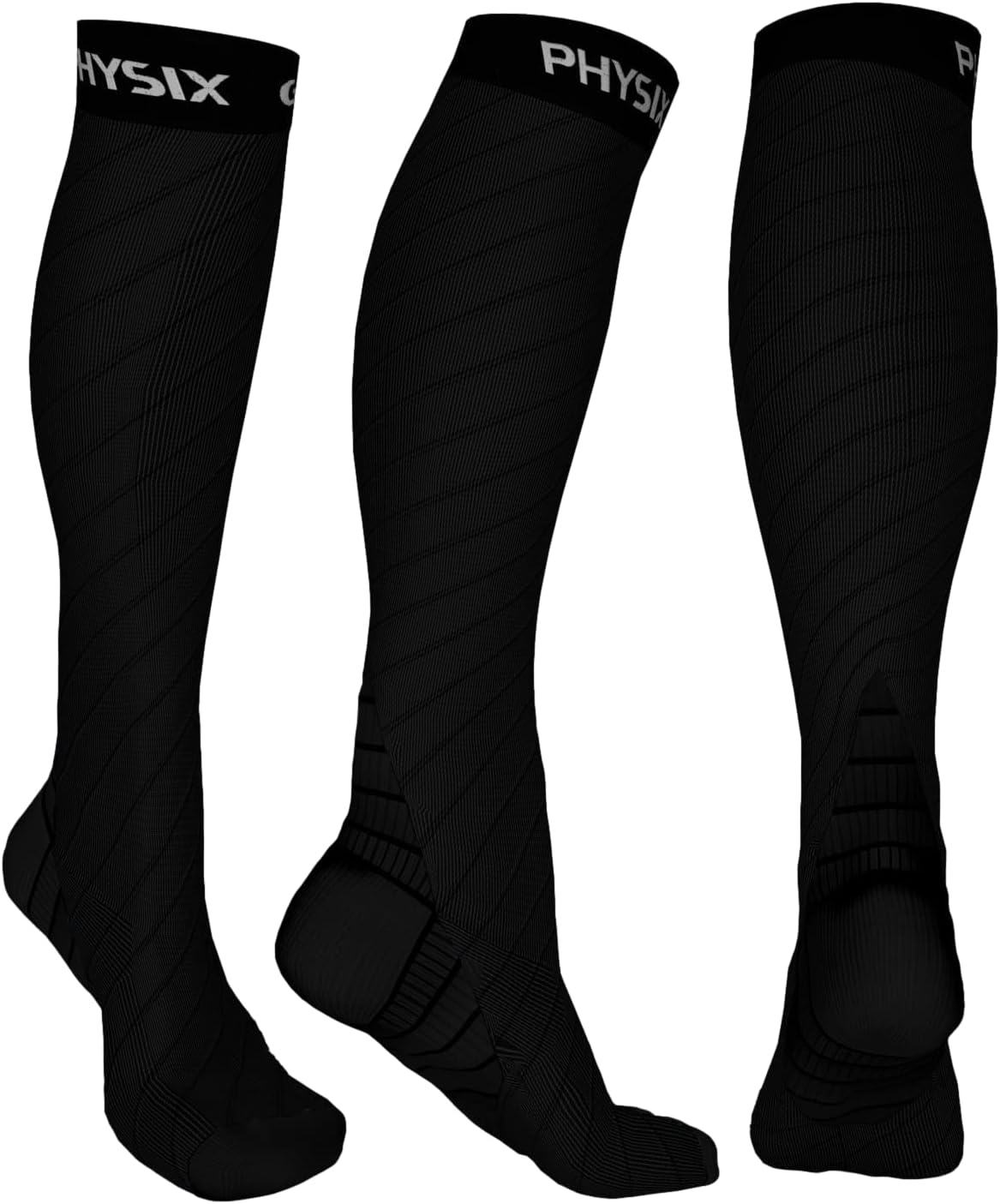
Physix Gear built its reputation in the athletic-support corner of the market, and the 20-30 mmHg knee high is the product that got it there. It is a firm sock: the pressure is graduated, tightest at the ankle and easing toward the calf, which is the pattern that supports return flow rather than simply squeezing the leg evenly. The fabric is a stretch blend with enough recovery to hold its shape through a long shift.
This is the sock to choose when the goal is function. Nurses and theatre staff who stand for twelve hours, cabin crew, and runners using it for post-run recovery are the audiences it fits. It stays up without rolling at the top, which is the practical test most compression socks fail on a long day, and the toe and heel are reinforced where the fabric takes the most wear.
The trade-off is exactly what you would expect from a firmer garment. It takes effort to put on, especially in the first weeks, and it is not the sock to wear around the house on a lazy Sunday. If you have never worn compression before, this is not a gentle introduction; start with a 15-20 mmHg sock and move up once you know how your legs respond.
Sizing follows calf circumference rather than shoe size, so measure the widest part of the calf before ordering. That single measurement is why some buyers find it too tight and others find it perfect: the same nominal size covers a range, and you want to sit in the middle of it, not at the edge.
Signature product: 20-30 mmHg knee high
Pressure: Graduated, firmest at the ankle
Format: Single pair and multi-packs
Fit note: Size by calf circumference
Best for: Long shifts, long flights, post-run recovery
2. FITRELL — The Multipack Workhorse
Best for anyone who wants several firm pairs and does not want to match socks after every wash.
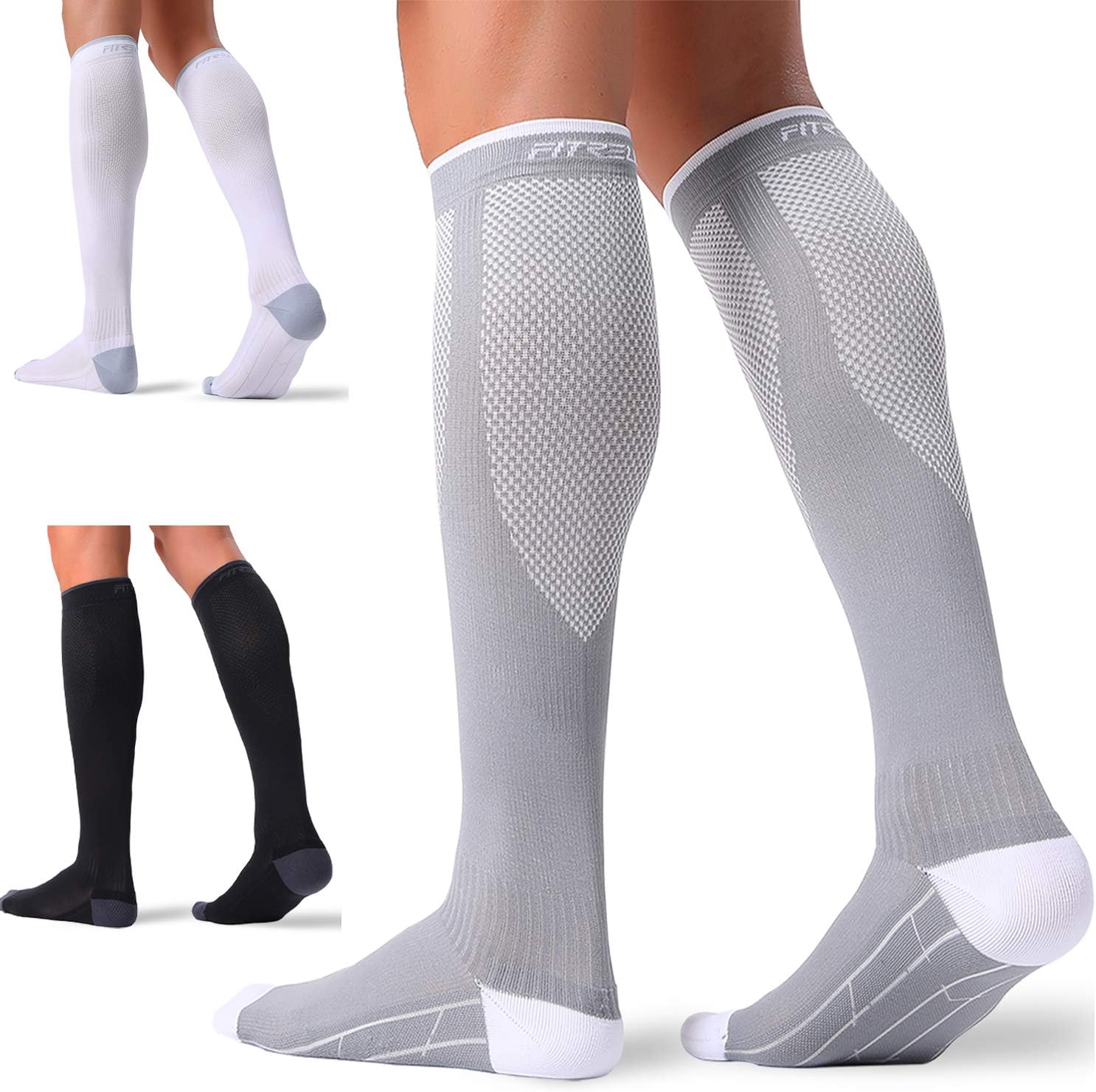
FITRELL sells compression socks the way people actually consume them: in threes. The set is a 20-30 mmHg graduated knee high in three colourways, which solves the practical problem that compression socks need to be washed after every use and a single pair leaves you without support on laundry day.
The construction is straightforward and honest: a graduated knit, a wide comfort cuff that does not dig in, reinforced heel and toe, and a smooth toe seam. Nothing about it is specialised, and that is the point. It performs at the firm end of the everyday range, works for travel, standing shifts and light training, and gives you three pairs for the commitment of one.
Where it differs from Physix Gear is in the last ten percent of refinement. The knit is slightly less dense, the pressure at the ankle feels a touch less precise, and the cuff, while comfortable, is a little softer than a clinical-grade sock. For most wearers those differences are invisible; for someone using compression every working day for years, the firmer construction of the single-pair option lasts longer per pair.
Sizing runs in the usual calf-based bands, and the three-pack covers standard men’s and women’s ranges. If you are between sizes, take the larger one: an over-tight compression sock is uncomfortable in a way that cannot be fixed by adjusting it.
Signature product: 3 pairs, 20-30 mmHg
Pressure: Graduated knee high
Format: 3-pair set
Fit note: Size up if between calf sizes
Best for: Daily rotation, travel, standing shifts
3. Dr. Scholl’s — The Household Name
Best for buyers who would rather buy compression from a brand they already recognise.
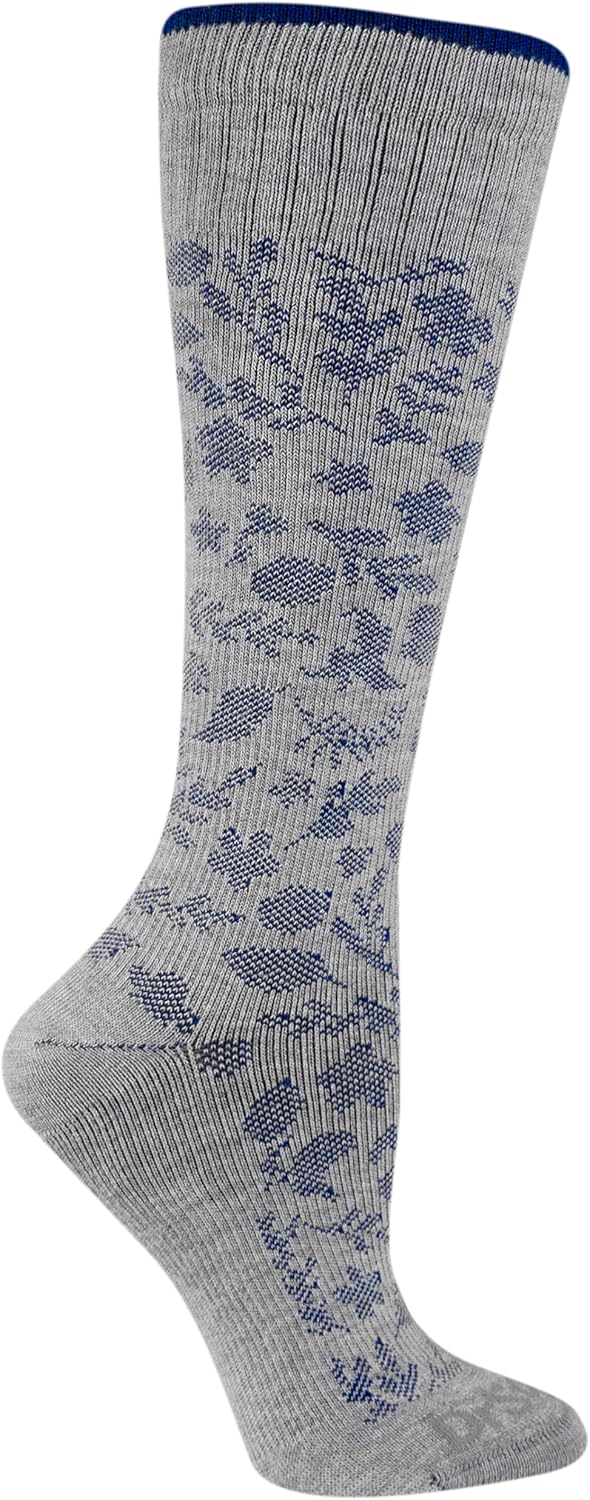
Dr. Scholl’s has been on pharmacy shelves for generations, and that history is the reason this sock exists in the form it does: a graduated 15-20 mmHg knee high with restrained styling, sold on familiarity rather than on performance claims. For a large group of buyers, that is the deciding factor. Compression is an unfamiliar purchase and a known name removes hesitation.
The build is smoother and more uniform than the sport brands. The knit is finer, the finish is neater, and the cuff is designed to be discreet under trousers rather than visible above a trainer. At the 15-20 mmHg level it is comfortable for a full day, easy to put on, and appropriate for the modest everyday support that most people actually want on a flight or a long drive.
The compromise is firmness and range. This is not a 20-30 mmHg garment and should not be bought expecting that level of pressure. The colour range is deliberately conservative, and the sizing bands are narrower than the sport brands’, so wearers with larger calves have fewer options. It is also, being a recognised name, the sock that buyers are most likely to over-assume about: the label reads medical, but the pressure is everyday.
For a first pair, a gift, or a sock to keep in a carry-on bag, the familiarity is worth paying for. For daily firm support, the sport brands do more.
Signature product: Graduated compression knee high
Pressure: Graduated 15-20 mmHg range
Format: Single pair and multi-packs
Fit note: Narrower bands, check calf measurement
Best for: First pair, travel, discreet daily wear
4. CHARMKING — The Everyday 15-20
Best for all-day comfort, first-time buyers and pregnancy swelling where a softer sock is the priority.
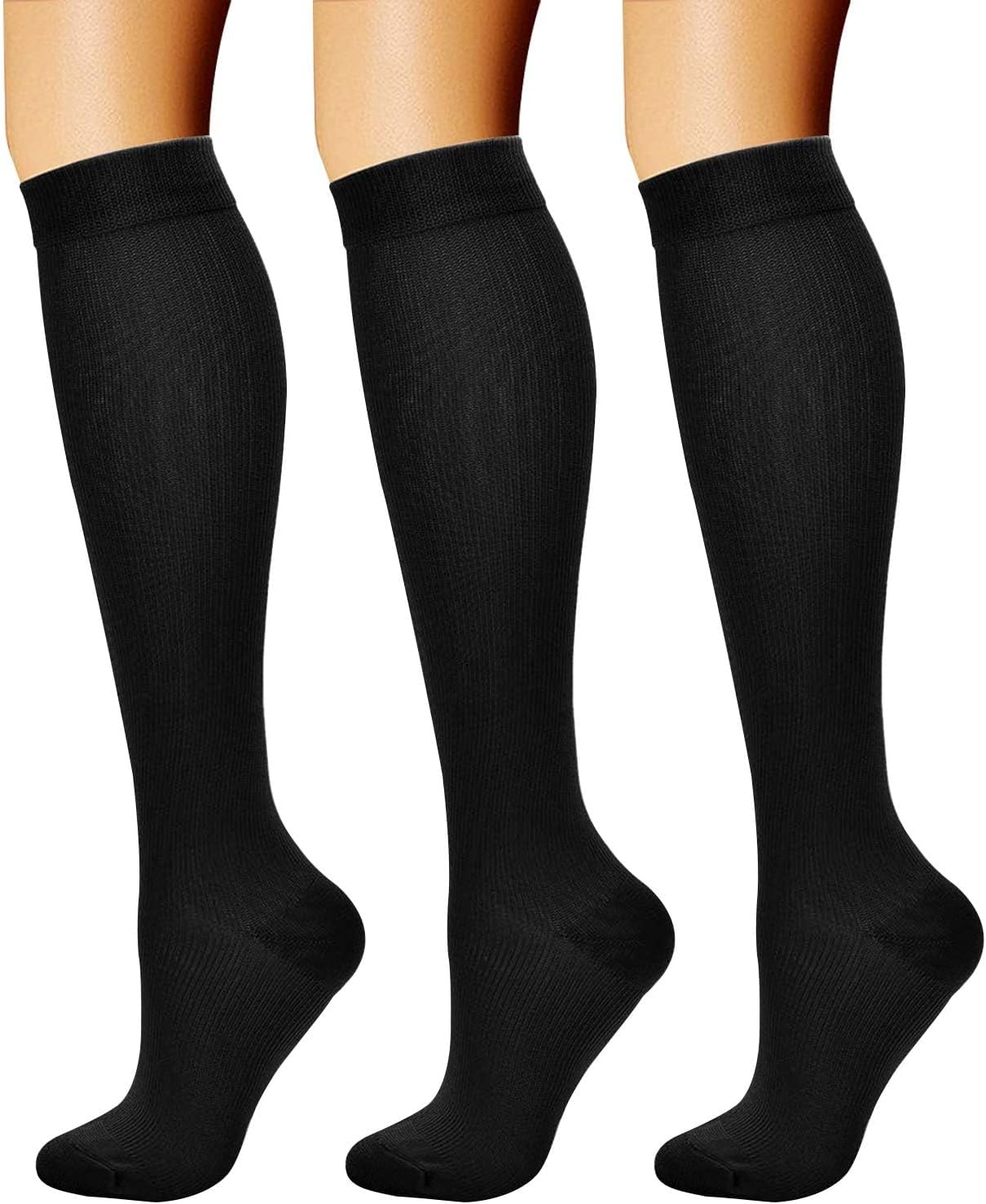
CHARMKING is the brand most buyers land on first, and the reason is the combination of a soft 15-20 mmHg knit, a three-pair set and a colour range wide enough to make compression socks look like ordinary socks. That last point should not be underestimated: a sock you are willing to wear is a sock that gets worn.
The pressure is genuinely mild. It supports without squeezing, which makes it suitable for a full working day, long car journeys, pregnancy-related swelling and the general heavy-leg feeling that comes from standing. It is also the easiest of the five to put on, which matters enormously for anyone with limited hand strength or for a first experience with compression.
What it does not offer is firm clinical support. If your reason for buying is post-surgical guidance, lymphoedema management or a clinician’s instruction, this is the wrong level and you should follow the advice you were given rather than a listing. For everything short of that, it is the most wearable sock in the group.
Durability reflects the softness. The knit is comfortable but less dense, so after many washes the pressure relaxes sooner than on a firm sock. Treat them as a consumable three-pack you replace periodically rather than a single lifetime purchase, and the value equation works out.
Signature product: 3 pairs, 15-20 mmHg
Pressure: Mild, graduated
Format: 3-pair set
Fit note: Standard calf bands, generous stretch
Best for: All-day wear, travel, first pair, pregnancy
5. BLITZU — The Footless Option
Best for runners and gym users who want calf support without pressure across the foot.
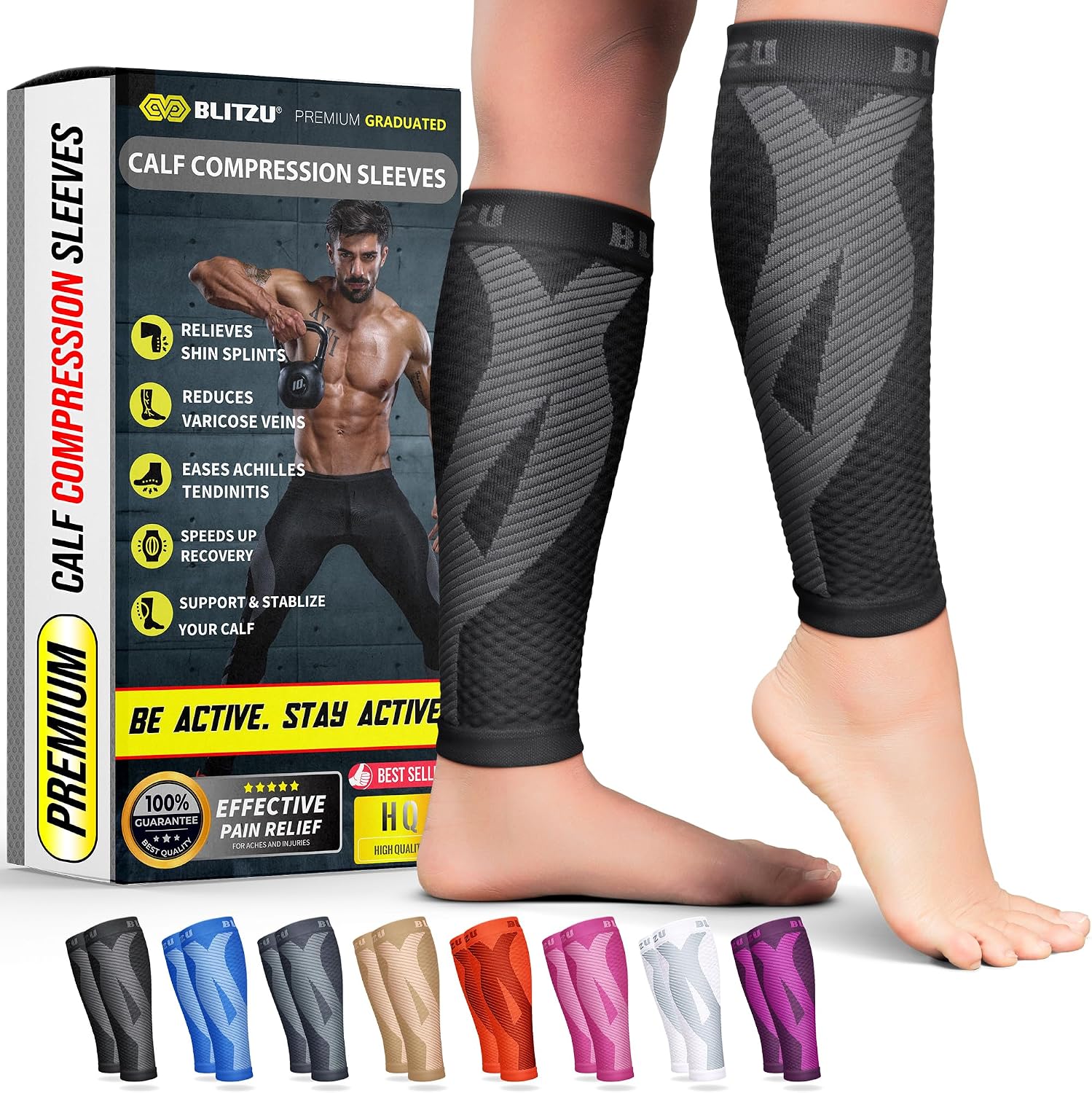
BLITZU makes calf sleeves rather than socks, and that difference is the whole reason to consider the brand. A sleeve covers the calf from ankle to below the knee and leaves the foot free, which means you can wear it with your own socks, with a running shoe that already fits precisely, or on a bare foot without a toe seam anywhere.
The audience for that is specific and large: runners who want calf support during a long effort without changing their footwear, gym users who want support during lifting or conditioning, and anyone whose feet dislike compression across the instep. The sleeve stays in place through movement, which is the practical test, and the fabric is a firm knit with a silicone-free grip band at the top and bottom.
The limitation is inherent to the format. Because it does not cover the foot and ankle in the way a sock does, it provides less of the graduated ankle-to-calf support that a full knee high delivers. For flight and post-shift recovery, a sock is the better tool. For activity, the sleeve is the more comfortable one.
Sizing is by calf circumference and the brand offers an extended range, which makes it one of the few options here for larger calves. If you are choosing between this and a sock, decide by use: support while moving points to the sleeve, support while sitting still points to the sock.
Signature product: Calf compression sleeve
Pressure: Firm knit across the calf only
Format: Single pair
Fit note: Size by calf circumference, extended range
Best for: Running, gym work, foot-pressure-sensitive wearers
How We Chose These Five Brands
Compression is the one clothing category where the specification genuinely matters more than the brand name, so the filter started with pressure levels and worked backwards to brands that cover them well.
Graduated construction confirmed. A sock that squeezes evenly is a tight sock, not a compression sock. Every product here uses graduated pressure, firmest at the ankle.
Fit by measurement, not by shoe size. All five size by calf circumference, which is the only measurement that predicts whether a compression garment will work.
Real-world staying power. The practical failure of compression socks is the cuff rolling down mid-shift. Cuff construction was assessed as a primary feature, not a detail.
No medical overclaiming. These are support garments. Where a clinician has advised a specific pressure level, that instruction outranks anything in this guide.
Why Trust Pliizy
No brand paid for placement here and none reviewed the guide before publication. The order reflects how many readers each product serves well, which is why a firm all-rounder leads and a specialist sleeve comes last rather than first.
All links are Amazon affiliate links. If you buy through one, this site may earn a commission at no extra cost to you, and that is what keeps the site free of display advertising and sponsored placements inside the content.
Prices and star ratings are deliberately absent. Compression socks are bought in multi-packs and discount cycles, and any figure printed here would be wrong within weeks. What does not change is the pressure level, the sizing method, the cuff construction and the format — and those are the four things this guide compares.
How to Choose Compression Socks
Four questions will usually settle the choice before you look at a single colourway.
Decide the pressure level first
15-20 mmHg is everyday support: comfortable, wearable all day, appropriate for travel, standing work and mild swelling. 20-30 mmHg is firm support: harder to put on, intended for shorter or more targeted use, and the level most sport and clinical brands build around. If a clinician has told you a number, use that number and ignore the rest of this section.
Measure your calf, not your shoe size
Compression socks are sized by the circumference of the widest part of the calf, and sometimes by ankle circumference as well. Measure with a soft tape while standing, and choose the size in the middle of your range rather than at the edge. This one measurement explains most of the reviews that say a sock is far too tight or far too loose.
Think about when you will wear it
Support while sitting still — flights, long drives, desk days — calls for a full knee high sock that covers the ankle. Support while moving — running, gym work, hiking — is often more comfortable as a footless calf sleeve. Buying a sleeve for a flight or a sock for a marathon is the mismatch that makes people give up on compression.
Check the cuff before the colour
The cuff is where compression socks fail. A cuff that rolls, digs in or leaves a deep mark after two hours makes the sock unusable regardless of its pressure rating. Wider, softer cuffs stay put better; very narrow elastic bands concentrate pressure at one line.
Plan for rotation
A compression sock is washed after every use and needs a day to recover its elasticity. Two or three pairs in rotation last noticeably longer than one pair worn daily, which is the practical argument for the multi-pack brands in this guide.
Frequently Asked Questions
The Short Version
For firm support on long shifts and long flights, Physix Gear’s 20-30 mmHg is the most capable sock here. If you want several firm pairs so laundry never leaves you without support, FITRELL’s three-pack is the practical choice. If a recognised pharmacy name is what makes you comfortable buying, Dr. Scholl’s delivers that. If you want a soft everyday sock you will actually wear all day, CHARMKING is the one. And if you want calf support while running without touching the fit of your shoe, BLITZU’s footless sleeve is the better tool.
Whatever you choose, size by calf circumference, start at the pressure level you will genuinely use, and rotate more than one pair. Compression works best as a habit rather than as a single purchase.


