
FTC Disclosure:This post contains affiliate links.We’re independently supported by our readers and we may earn a commission when you buy through our links.
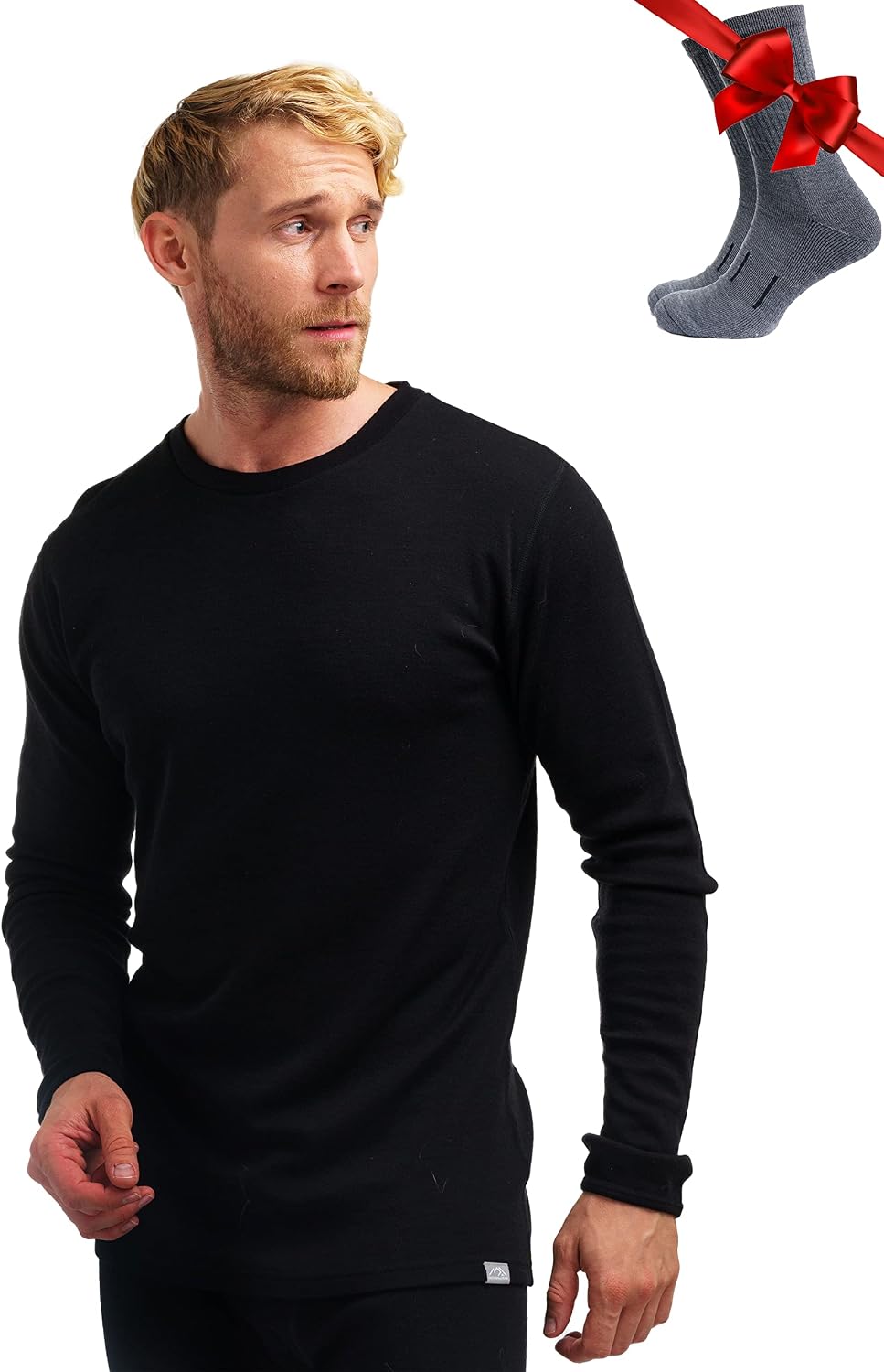

Merino wool is the only base layer material that behaves well in both directions: it keeps you warm when the temperature drops and does not turn into a sauna when you start moving. That is why it costs more than polyester and why people who try it tend to stop buying anything else.
The complication is that merino is sold by weight and by fibre quality, and the two numbers people usually see on a listing — “100% merino” and a colour swatch — tell you almost nothing. A 150 gsm merino shirt and a 400 gsm merino shirt are both 100% merino and are not remotely the same garment. The first is a summer layer that wicks; the second is a winter layer that insulates. Buying the wrong weight is the mistake that makes people conclude merino “does not work”.
This guide is organised by brand rather than by a ranked single shirt, because each brand here sits at a different weight and price position: broad value coverage across several weights, the American heritage option, the premium New Zealand knit, the mid-weight workhorse, and the genuinely heavy winter layer. Each brand is represented by one current shirt sold on Amazon. We do not print prices or star ratings, because both move faster than any article can keep up with.
At a Glance: The Five Brands
| Award | Brand | Signature Layer | Best For |
|---|---|---|---|
| Top Pick | Merino.tech | 100% Merino Long Sleeve | One brand covering every weight and colour |
| Best Heritage Knit | Smartwool | Classic Thermal 250 | Buyers who want the original US merino name |
| Best Premium Finis | Icebreaker | 200 MerinoFine Ace | Softness and finish above all |
| Best Mid-Weight Value | Minus33 | Long Sleeve Crew | Skiing, hiking, everyday winter wear |
| Best Heavy Winter Layer | MERIWOOL | 400g Heavyweight | Deep cold, stationary outdoor work |
Brand-by-Brand Comparison
The table below compares the five brands on the four variables that actually determine whether a merino base layer works for you: fabric weight, fibre purity, how the garment handles odour and washing, and the fit it is cut to.
| Brand | Typical Weight Range | Fibre Purity | Fit Character | Standout Trait |
|---|---|---|---|---|
| Merino.tech | 160 / 250 / 320 gsm | 100% merino | Standard, relaxed | Every weight and colour in one place |
| Smartwool | 150 / 250 gsm | 100% merino, core-spun | Athletic, true to size | The original US merino knit |
| Icebreaker | 175 / 200 gsm | 100% merino, fine gauge | Slim, body-hugging | Softest hand of the five |
| Minus33 | 230 / 280 gsm | 100% merino | Generous, roomy | Mid-weight value workhorse |
| MERIWOOL | 400 gsm | 100% merino | Roomy, built for layering | Genuine deep-cold insulation |
1. Merino.tech — The Broadest Range
Best for one-stop shopping: nearly every weight, colour and combination in a single brand.
Merino.tech is the brand that made 100% merino base layers ordinary rather than premium. It sells tops, bottoms and sets in several weights, dozens of colours and both men’s and women’s cuts, all in 100% merino rather than a wool-synthetic blend. For a buyer who wants to try merino without committing to a specialist retailer, that breadth is the whole value proposition.
Construction is straightforward and consistent with the price position: a fine-gauge knit, flatlock seams that do not rub under a pack strap, a tagless neck label, and a cut that sits close but not tight. The mid-weight version is the one to start with: warm enough for a cold morning, thin enough to wear under a shirt without adding bulk, and washable in a machine on a wool cycle.
The honest limitation is refinement at the high end. The knit is good, not exquisite; the fine-gauge softness of Icebreaker’s premium line is noticeably absent, and the fabric can feel slightly crisper against the skin on the lighter weights. Longevity is fair rather than exceptional: merino abrades at friction points, so under a backpack hip belt or a harness, expect visible wear after a season of hard use.
Sizing runs true to standard shirt sizes with a slightly relaxed body. If you are between sizes and intend to wear it as a true next-to-skin layer, take the smaller; if you want to wear it as a light midlayer over a t-shirt, take the larger. Colour availability changes seasonally, which is one practical reason the brand’s breadth matters.
Signature layer: 100% merino long sleeve thermal
Weights offered: Light, mid and heavy options
Fabric: 100% merino wool, fine-gauge knit
Fit note: True to size, slightly relaxed body
Best for: First merino layer, multi-colour rotation
2. Smartwool — The Heritage Knit
Best for buyers who want the name that built the American merino category, in a proven mid-weight cut.
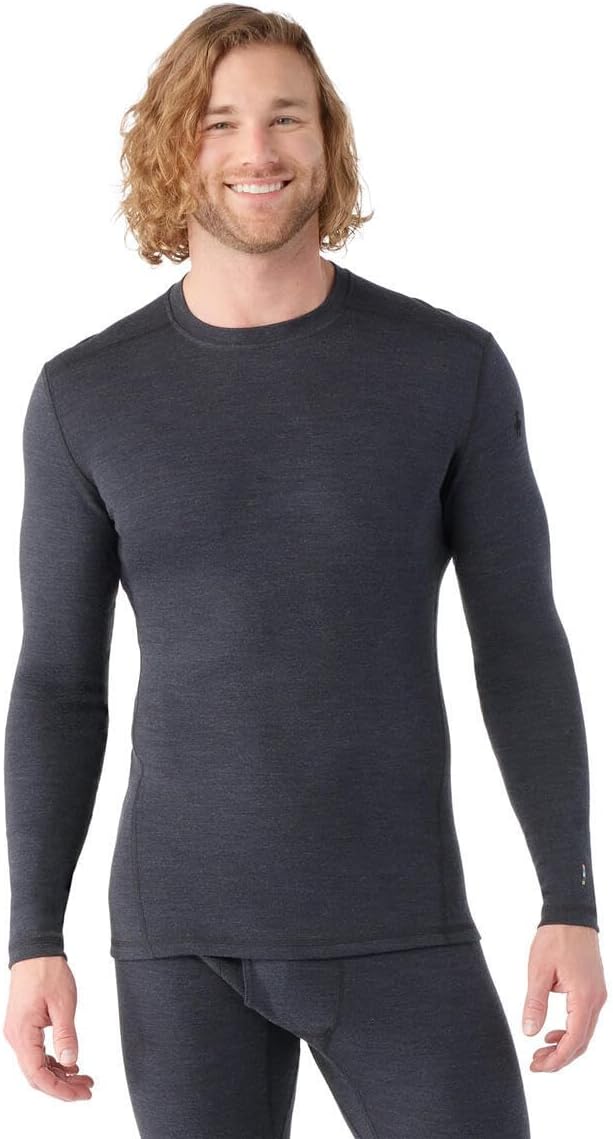
Smartwool started with socks in Colorado in 1994 and effectively created the modern market for merino next-to-skin layers. The Classic Thermal Crew is the direct descendant of that work: a 250-weight 100% merino knit with a smooth hand, a crew neck that sits flat under a collar, and a body length that stays tucked in when you bend over.
What the heritage actually buys you is consistency. The knit is even, the seams are finished properly, and the shoulder construction uses a core-spun technique that adds durability where a pack strap sits without introducing synthetic content against the skin. If you have owned merino before and know what good feels like, this is reassuringly familiar.
The weight is the important detail: 250 gsm is a true mid-weight, warm enough for skiing and cold-weather hiking under a shell, and too warm for high-output activity in mild conditions. Buyers who run hot or hike in spring should drop to the 150 weight in the same line rather than wearing this and overheating.
The limitations are price position and cut. This sits at the premium end of the mainstream, and the athletic cut runs close through the chest and shoulders, so broader wearers sometimes size up. Neither is a defect; both are reasons to check the size chart rather than assume.
Signature layer: Classic Thermal Crew, 250 weight
Fabric: 100% merino, core-spun shoulder panels
Fit note: Athletic, close through chest
Best for: Skiing, cold-weather hiking, winter layering
3. Icebreaker — The Premium Finish
Best for anyone whose priority is how the fabric feels against skin for hours at a time.
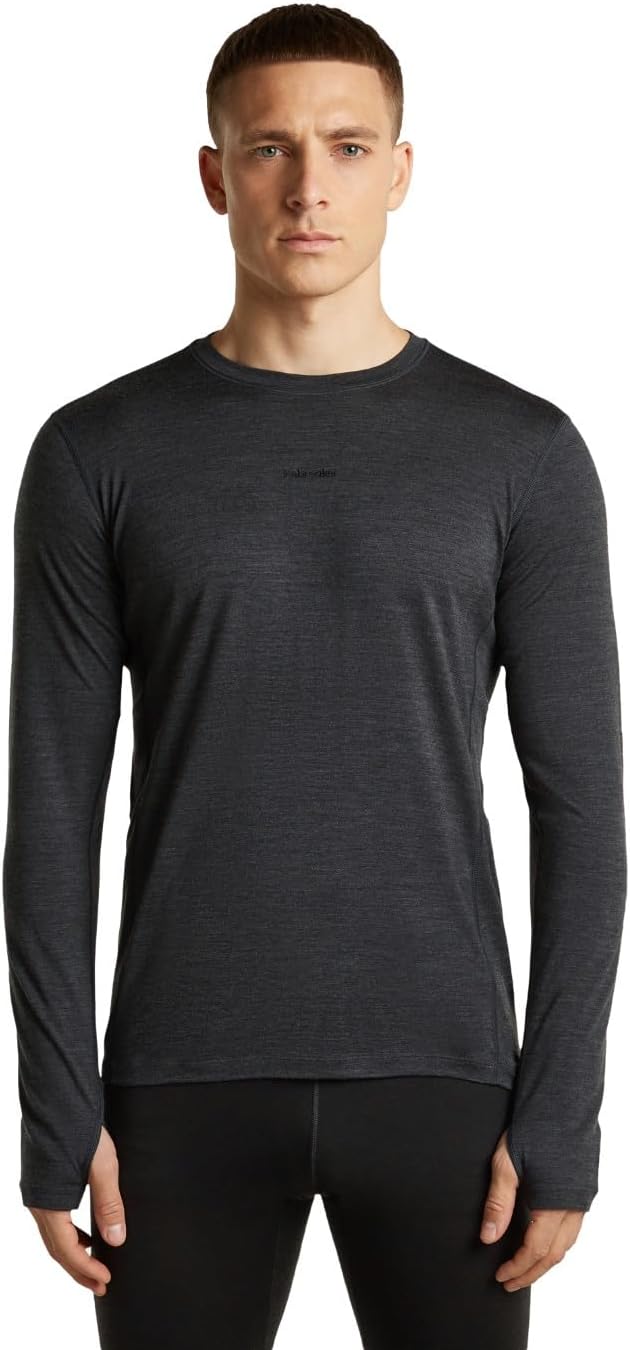
Icebreaker began in New Zealand in 1995 with a simple proposition: merino from the source, made into garments with traceable fibre. The MerinoFine Ace line is the current expression of that idea, using a fine-gauge knit that produces the softest hand of any shirt in this guide and a slim, body-hugging cut that works as a true next-to-skin layer.
The difference is tactile rather than measurable. Where a value merino shirt feels like a fine knit, this feels closer to a soft jersey, with none of the faint prickle that some people notice in coarser wool. It also manages moisture and odour in the way merino is famous for: worn for several days on a winter trip, it stays socially acceptable far longer than any synthetic layer.
Two things to weigh before buying. The cut is deliberately slim, which is ideal under a shell and less forgiving over a heavier build. And the weight is light: the 200 gsm fabric is a three-season layer in active use, not a deep-winter garment on its own. It is designed to be the base of a system, with insulation and a shell above it.
This is also the least price-sensitive purchase in the group. You are paying for the fibre quality and the finish, not for extra features, and the value proposition depends entirely on how much you wear it. For someone who lives in a base layer through winter, the comfort difference is worth it. For occasional use, it is not.
Signature layer: 200 MerinoFine Ace crewe
Fabric: 100% merino, fine-gauge
Fit note: Slim, body-hugging
Best for: Multi-day trips, winter base layering, sensitive skin
4. Minus33 — The Mid-Weight Workhorse
Best for skiing, hiking and everyday winter wear where a middle weight does most of the work.
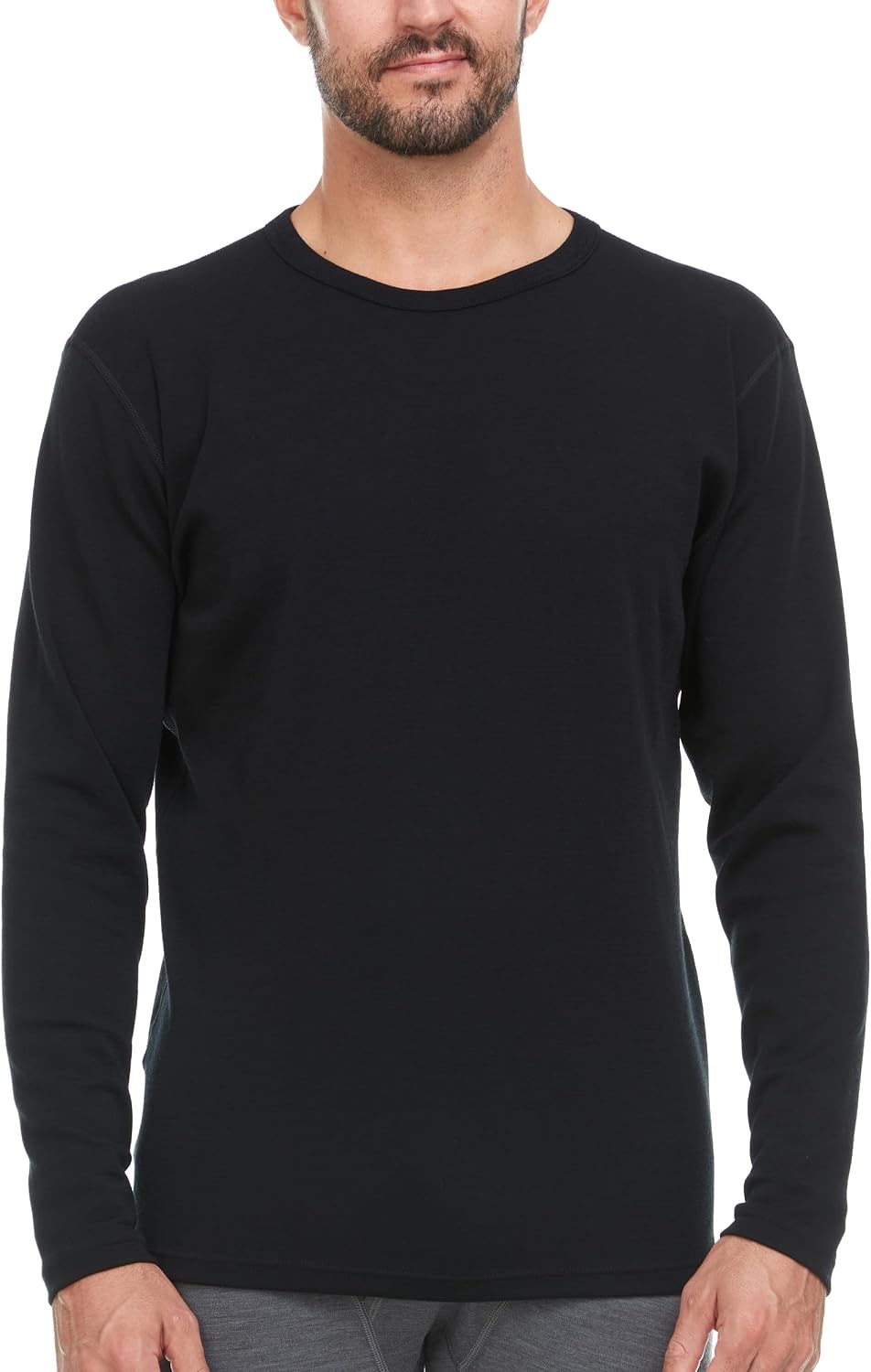
Minus33 is named for the New Hampshire company’s relationship with cold, and it has been selling 100% merino base layers direct for long enough that its crew shirt is a known quantity among people who work outdoors. It sits in the middle of the weight range with a generous, practical cut.
The case for it is simple: it does the job of a mid-weight merino layer without the premium finish premium, at a size and shape that fits a broad range of bodies. The fabric is substantial, the seams are flat, and the body length is cut long enough to stay tucked during activity. Under a shell in cold conditions it is warm; on its own indoors in winter it is comfortable rather than stifling.
Where it gives ground is refinement. The knit is slightly heavier in hand than the premium brands, so it feels more like wool and less like jersey, and the cut is roomy enough that it does not work as a snug next-to-skin layer under a very close-fitting shell. The colour range is functional rather than fashionable, which matters if you want a base layer that does not look like long underwear.
If your use is skiing, snowshoeing, winter hiking or working outside, this is the sensible middle choice: enough weight for real cold, enough durability for abrasion, and a fit that accommodates a midlayer over it without strain.
Signature layer: 100% merino long sleeve crew
Fabric: 100% merino, mid-weight
Fit note: Generous and roomy
Best for: Skiing, winter hiking, outdoor work
5. MERIWOOL — The Deep-Cold Layer
Best for genuine winter cold: stationary outdoor work, winter camping and very low temperatures.
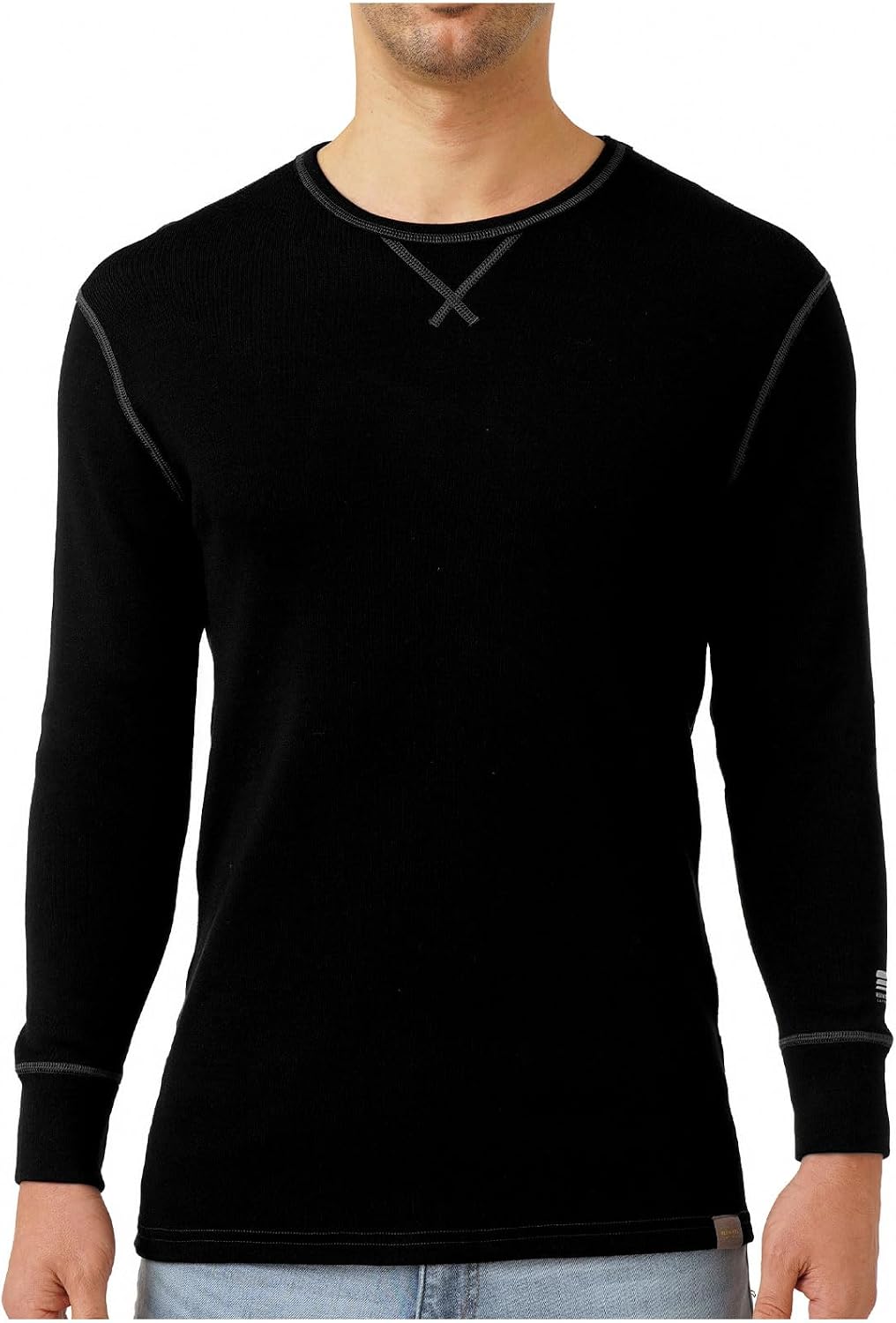
MERIWOOL’s 400 gsm shirt is the outlier of the group, and deliberately so. At 400 gsm it is roughly twice the fabric weight of a standard mid-weight layer, which makes it a garment for a specific job rather than a general base layer: keeping a body warm when activity is low and the temperature is low with it.
In that job it works well. The fabric is dense, the collar and cuffs seal, and the cut is roomy enough to wear over a lighter merino layer without binding. For winter camping, ice fishing, working outside in freezing conditions or anyone who feels the cold badly, this is the layer that makes a difference rather than a marginal one.
For anything active it is too much. Hiking uphill or skiing hard in a 400 gsm merino shirt will overheat you faster than any other garment here, and because the fabric is thick, it also takes longer to dry if it does get damp. It is also the bulkiest under a close-fitting shell, which limits how it can be layered.
The right way to think about it is as a replacement for a fleece in a cold-weather system rather than as a direct substitute for a 200 weight base layer. Bought for that role, at its weight class it is the most capable option here.
Signature layer: 400 gsm heavyweight thermal shirt
Fabric: 100% merino, heavyweight
Fit note: Roomy, layers over a light base
Best for: Winter camping, stationary outdoor work, very cold climates
How We Chose These Five Brands
Merino base layers are sold on a fibre claim and judged on a weight number, so the comparison had to start with what each brand actually puts on your skin rather than with how it markets the fibre.
100% merino verified, not assumed. Blends are common and legitimate, but a blend is not what buyers searching for merino expect. Every shirt here is 100% merino.
Seam construction checked. Flatlock seams are the difference between a layer that disappears under a pack strap and one that rubs a raw line into your shoulder.
Cut compared across body types. A slim next-to-skin cut and a roomy midlayer cut serve different wearers. Both are represented here rather than one being treated as correct.
Fit for a real layering system. Base layer, insulation and shell were considered together, because a merino shirt that cannot be layered is a shirt that gets left in the drawer.
Why Trust Pliizy
No brand paid for placement and none reviewed this guide before publication. The order reflects how many readers each shirt serves well, which is why the broadest range leads rather than the most expensive knit.
All links are Amazon affiliate links. If you buy through one, this site may earn a commission at no extra cost to you, and that is what keeps the site free of display advertising and paid placements inside the content.
Prices and star ratings are absent on purpose. Merino pricing swings with season and promotion, and review counts change daily. What stays stable is the fabric weight, the fibre content, the seam construction and the cut — and those are the four things this guide actually compares.
How to Choose a Merino Base Layer
Four questions decide most purchases in this category, and the first one is the one people skip.
Pick the weight before the brand
Light, around 150-175 gsm, is for high-output activity and mild conditions. Mid, around 200-250 gsm, is the all-purpose winter layer for skiing and hiking. Heavy, 300 gsm and above, is for low activity in real cold. Choosing a brand first and a weight second is how people end up with a layer that is either too warm or too thin.
Decide whether you want 100% merino or a blend
100% merino gives the best odour resistance and the softest feel against skin, but it wears faster at friction points. A merino-synthetic blend is more durable and cheaper, at some cost in comfort and smell resistance. Neither is wrong; a blend is simply a different trade, and it should be a deliberate one.
Check the seams and the shoulder panels
Flatlock seams lie flat and do not rub. Overlocked seams create a ridge that becomes painful under a pack strap after a few hours. Shoulder panels, sometimes core-spun, add durability exactly where a strap sits. This is the detail that separates a layer you wear for years from one you retire after a season.
Match the cut to how you will wear it
A slim, body-hugging cut is right for a true next-to-skin layer under a close-fitting shell. A roomy cut is right if you will wear it over a t-shirt or as a light midlayer. Buying a slim shirt to wear as a midlayer, or a roomy shirt to wear under a race-fit shell, is a fit problem no brand can solve.
Plan the wash routine
Merino tolerates machine washing on a wool cycle but not hot water or a hot dryer. Air dry it flat, use a wool-specific detergent, and avoid fabric softener, which coats the fibre and reduces its moisture handling. A layer washed this way lasts years; the same layer washed hot and tumble dried pills within months.
Frequently Asked Questions
The Short Version
For a first merino layer with the widest choice of weights and colours, Merino.tech is the practical entry. If you want the American name that built the category in a proven 250 weight, Smartwool’s Classic Thermal Crew is it. If softness and finish matter more than price, Icebreaker’s MerinoFine line is the premium answer. For skiing, winter hiking and outdoor work in the middle of the range, Minus33 is the durable workhorse. And for genuine deep cold where activity is low, MERIWOOL’s 400 gsm layer does the job nothing else here can.
Whatever you buy, choose the weight first, check the seams second, and wash it cold and air-dry it flat. Merino repaid properly lasts years; merino washed like cotton does not.


