
FTC Disclosure:This post contains affiliate links.We’re independently supported by our readers and we may earn a commission when you buy through our links.

A rain jacket is the piece of clothing people buy most often in a hurry and regret most often afterwards. The listings all promise waterproof, breathable and packable, and most of them are telling the truth in a narrow sense: the shell will keep rain out for a while. What separates the five brands below is everything after that first hour — whether the fabric keeps breathing when the humidity rises, whether the hood actually stays on in wind, whether the seams are taped or merely stitched, and whether the jacket is still wearable after twenty washes.
This guide is organised by brand because a rain shell is a technology product sold as clothing. Each brand here has a different waterproofing system and a different idea about who the jacket is for. Columbia builds the everyday jacket most people actually need. The North Face builds the one that also looks right in a city. Marmot builds the lightweight technical shell for people who care about grams. Eddie Bauer builds the quiet mid-range option with a lifetime of American outdoor retail behind it. And 33,000ft builds the packable value jacket that lives in a bag.
Each brand is represented by one current jacket sold on Amazon, so you can open the listing, read the waterproof rating and the fit notes and check availability in one place. We do not print prices or star ratings, because both move too fast to keep accurate, and a stale figure is worse than none.
At a Glance: The Five Brands
| Award | Brand | Signature Jacket | Best For |
|---|---|---|---|
| Top Pick | Columbia | Watertight II | One jacket for commuting and day hikes |
| Best Street-to-Trail | The North Face | Antora | A shell that works in town and on trail |
| Best Technical Shell | Marmot | Precip Eco | Light pack weight and real breathability |
| Best Mid-Range | Eddie Bauer | Rainfoil WeatherEdge | Quiet quality without a loud logo |
| Best Budget Packable | 33,000ft | Packable Rain Jacket | A jacket that lives in a daypack |
Brand-by-Brand Comparison
The four numbers that matter in a rain shell are the waterproof rating, the breathability rating, the packed volume and whether the seams are fully taped. The table below compares how the five brands position themselves on those dimensions, so you can narrow the field before reading a single product listing.
| Brand | Waterproofing System | Build Character | Packability | Standout Trait |
|---|---|---|---|---|
| Columbia | Omni-Tech laminate | Everyday weight, soft hand | Packs into its own pocket | The most balanced all-round shell |
| The North Face | DryVent two-layer | Structured, clean cut | Packs small, not pocket-sized | Reads as streetwear, not gear |
| Marmot | NanoPro recycled coating | Light, technical, trim | Compresses to fist size | Best weight-to-protection ratio |
| Eddie Bauer | WeatherEdge laminate | Mid-weight, classic cut | Packs into a pocket | Understated, long-wearing build |
| 33,000ft | Coated polyester, 10000mm | Light, roomy, simple | Very small packed volume | Most jacket per unit of commitment |
1. Columbia — The Everyday Standard
Best for one jacket that covers commuting, travel and day hikes without asking you to think about it.
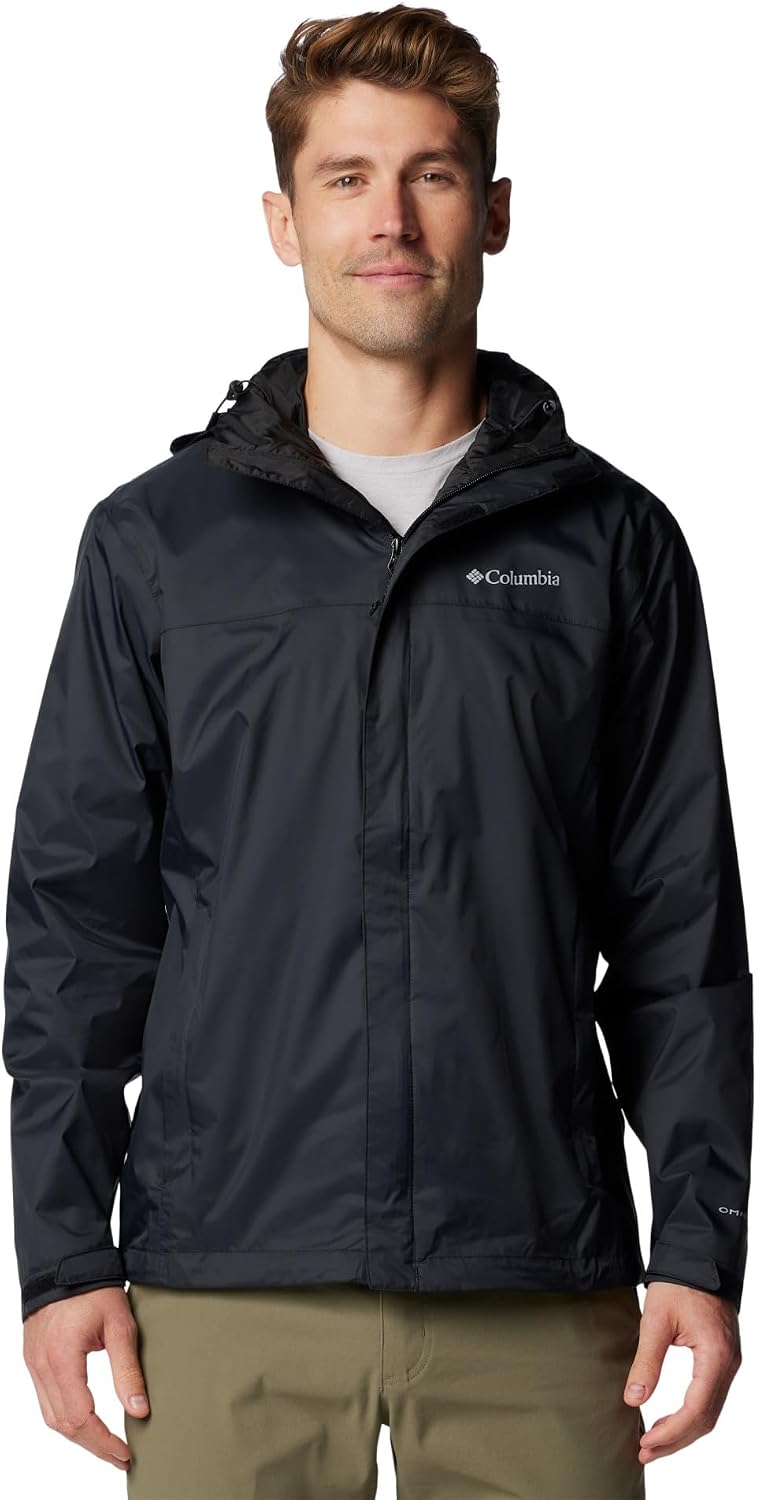
Columbia has been making rainwear since 1938, when it started as a hat company in Portland, Oregon, and that is the reason its shells behave like clothing rather than like equipment. The Watertight II is the brand’s long-running entry jacket: a two-layer Omni-Tech shell with a mesh lining, an adjustable hood, elastic cuffs and zip pockets deep enough for a phone and a wallet.
What makes it the top pick here is not a standout specification, it is the absence of a weakness. The fabric is soft enough to wear over a shirt without feeling like plastic, the cut leaves room for a midlayer, the hood has a drawcord that actually holds, and the whole thing folds into its own pocket. For the majority of buyers, whose rain exposure is a walk to the car, a commute, a school run or a weekend day hike, that is the complete specification.
On a real mountain it gives ground to Marmot. The mesh lining adds warmth you may not want on a humid climb, the breathability is adequate rather than excellent, and it is heavier when packed than a technical shell. But it is also half the fuss, and the difference in performance shows up only in conditions most people do not choose to walk in.
Sizing is close to standard, with room through the shoulders for a fleece underneath. The regular fit is the one to buy unless you intend to layer heavily; the big-and-tall runs are available separately on some styles. For a first rain jacket, or a replacement for one that finally gave out, this is the least risky purchase in the category.
Signature jacket: Watertight II
Waterproofing: Omni-Tech two-layer laminate
Features: Adjustable hood, zip pockets, packs into pocket
Fit note: Standard, room for a midlayer
Best for: Commuting, travel, day hikes
2. The North Face — The Street-to-Trail Shell
Best when the jacket has to look right in a city and still hold up on a wet trail.
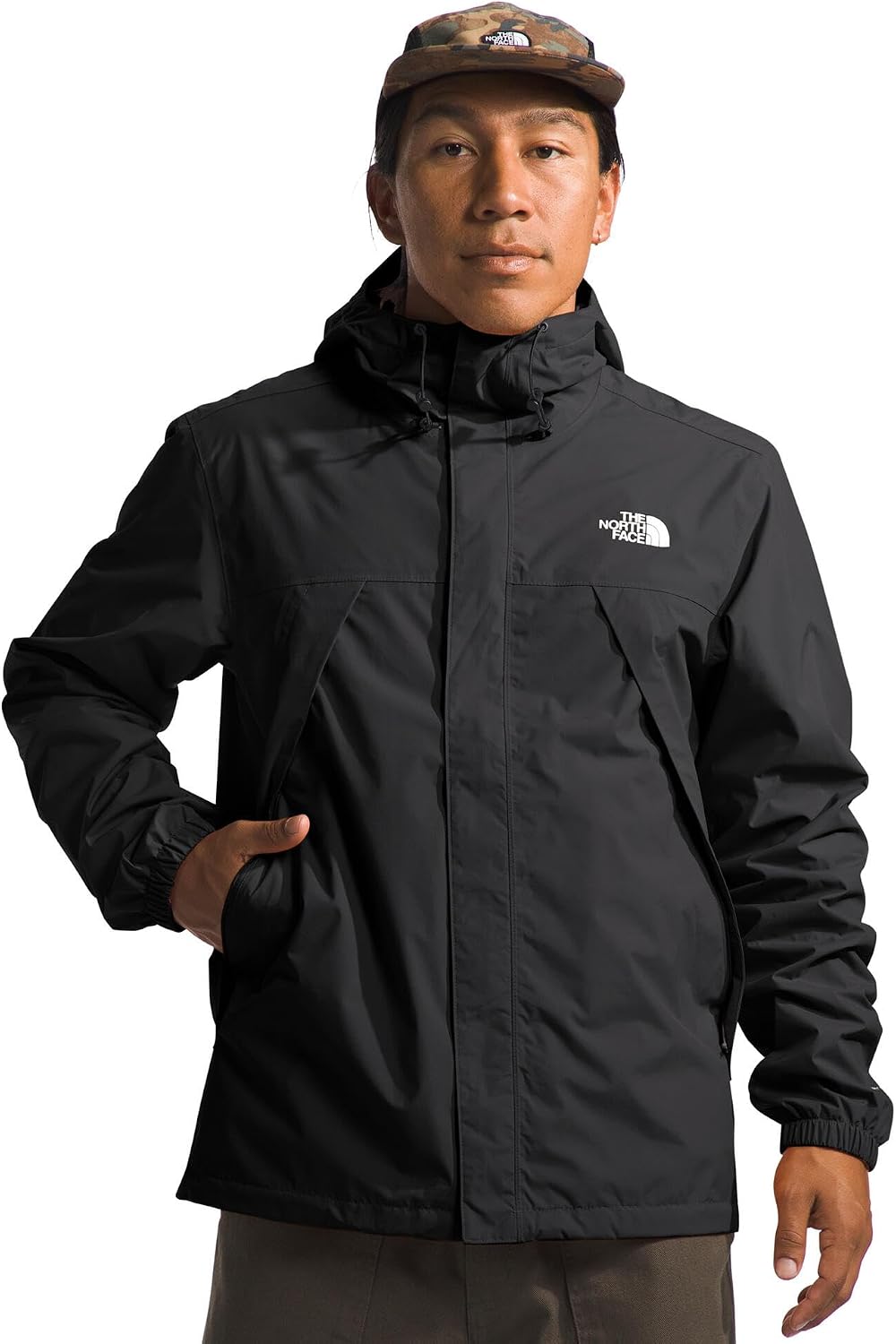
The North Face started in San Francisco in 1966 as a climbing and expedition brand, and its current identity is somewhere between technical outerwear and everyday streetwear. The Antora is the jacket that sits on that seam: a two-layer DryVent shell with a clean silhouette, a fixed adjustable hood and a cut that does not look like a technical garment when worn with jeans.
That dual identity is the entire argument for buying it. A jacket you are willing to wear to a restaurant is a jacket you will actually carry, and the most common failure mode of rain shells is that they get left at home because they look like gear. The Antora avoids that failure. It is also structurally sound: seams are sealed, the hood is shaped rather than floppy, and the fabric has enough body to keep rain off the shoulders instead of clinging.
The compromise is packability and weight. It folds down reasonably but not into a pocket, so it takes a bit more room in a daypack than a dedicated packable shell. Breathability is consistent with a two-layer dry-laminate shell, which is to say fine for walking and light climbing and not a substitute for a vented alpine jacket on a hard ascent.
Sizing runs true with a slightly athletic cut, so if you plan to layer a puffy underneath, consider going up one. The line also covers big-and-tall sizes, which is worth checking before you decide the jacket will not fit. Colourways change seasonally, so the specific shade you see today may not exist in six months.
Signature jacket: Antora
Waterproofing: DryVent two-layer
Features: Sealed seams, adjustable hood, zip pockets
Fit note: True with an athletic cut
Best for: City wear, commuting, light trail use
3. Marmot — The Technical Minimalist
Best for hikers and travellers who count grams and want a shell that disappears into a pack.
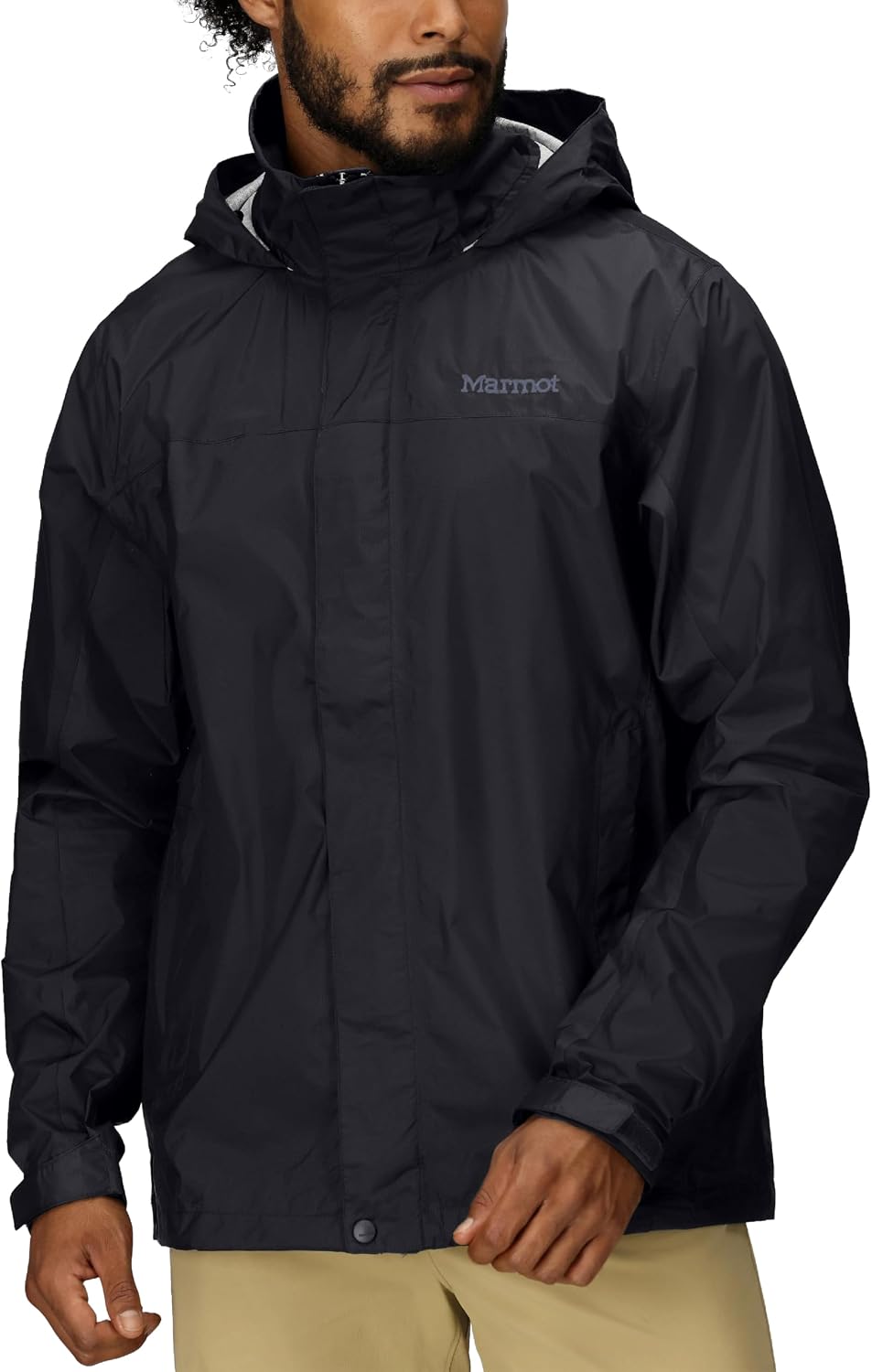
Marmot was founded in 1974 in California by a group of climbers, and its Precip line has been the brand’s best-selling rain shell for decades because it solved a specific problem: a jacket light enough to always carry, cheap enough to own without anxiety, and genuinely waterproof. The Precip Eco updates that formula with a shell made from recycled fabric and the same NanoPro coating technology.
This is the lightest and most compressible jacket in the group after the budget option, and it is the one that behaves most like technical equipment. Pit vents let heat out on a climb without opening the front, the hood is helmet-compatible on the technical variants, and the whole jacket compresses to roughly the size of a fist. For a daypack, a travel bag or a cycling commute, that volume is the difference between carrying a shell and leaving it behind.
The trade-off is feel. NanoPro is a coating-based system rather than a membrane, which keeps the jacket light and affordable but means the fabric is crisper in the hand and less soft against the skin than Columbia’s laminate. It also asks for more care: coatings rely on a durable water repellent finish, and when that finish wears off the jacket wets out on the surface even though it does not leak. A wash-in repellent treatment restores it.
Sizing is true with a trim, athletic cut; layering a bulky fleece underneath is not its purpose. If you want one jacket for city and trail, the North Face is the more versatile answer. If you want the lightest jacket that is still serious about weather, this is it.
Signature jacket: Precip Eco
Waterproofing: NanoPro coating, recycled shell fabric
Features: Pit vents, adjustable hood, packable
Fit note: Trim and true to size
Best for: Hiking, travel, cycling, minimal pack weight
4. Eddie Bauer — The Quiet Mid-Range
Best for buyers who want solid construction and a lifetime of outdoor retail history without a loud logo.
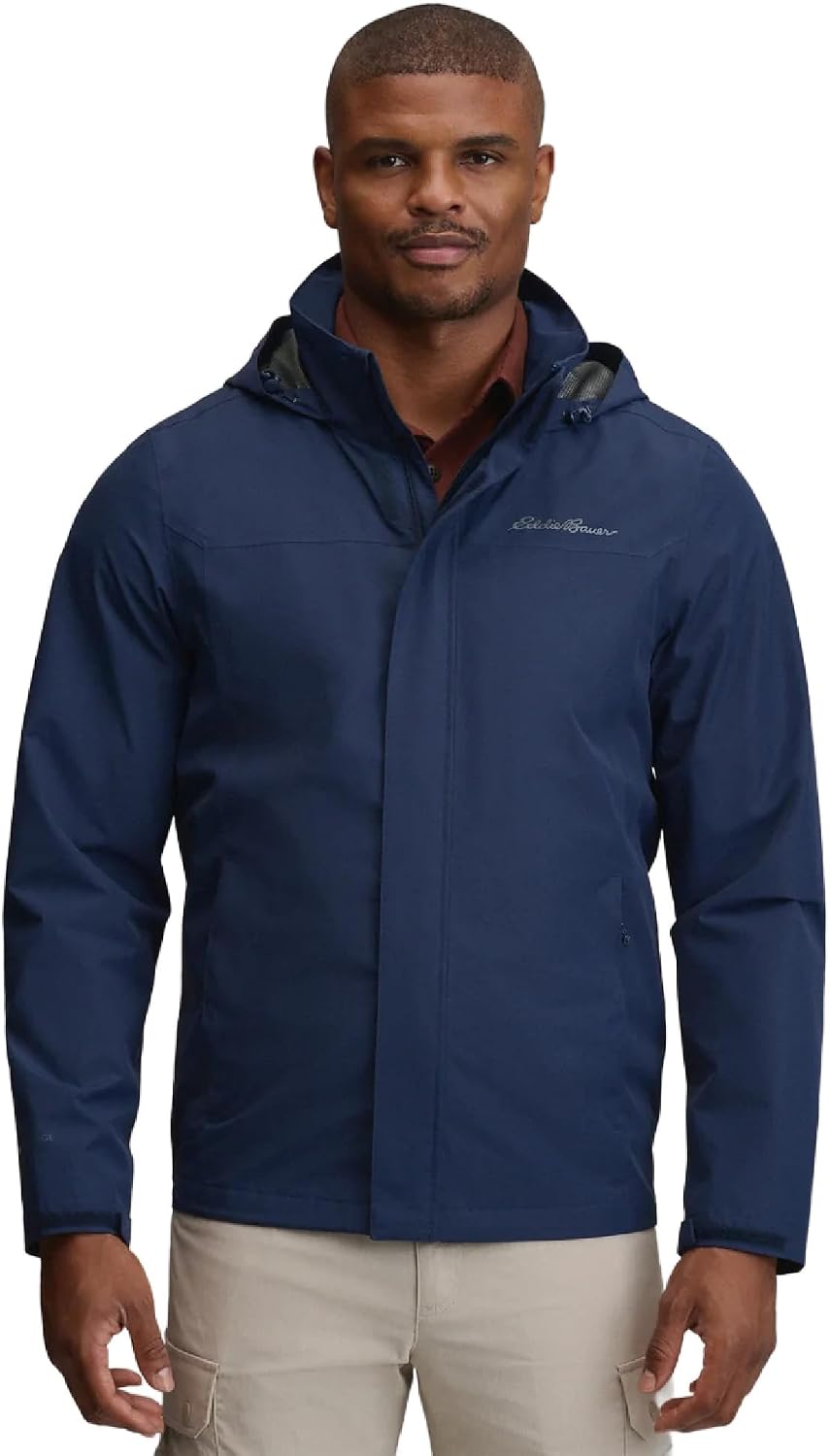
Eddie Bauer has been selling outdoor clothing in the United States since 1920, and it is one of the few brands in this group whose heritage predates almost everything else in the category. The Rainfoil uses the company’s own WeatherEdge waterproof laminate, a system built for wet, cold Pacific Northwest conditions rather than for photographs.
In practice this is the jacket that feels more expensive than its position suggests. The fabric has body, the seams are properly finished, the hood is cut to stay put, and the whole shell packs into its own pocket. The cut is classic rather than athletic, which makes it comfortable over a sweater and forgiving across the shoulders, and the styling is deliberately plain in a way that ages better than trend-driven shells.
Where it gives ground is on breathability under hard effort and on the sharpness of the details. There are no pit vents on the standard Rainfoil, the hood adjustment is simpler than on a technical shell, and the fabric, while solid, is heavier than Marmot’s. For a jacket worn for commuting, dog walks, travel and casual hiking in wet weather, none of that matters. For sustained climbs, it does.
Sizing runs generous, which is useful if you layer, and the big-and-tall range is available on several styles. If you are between Columbia and this, choose Columbia for the softer feel and Eddie Bauer for the more structured, longer-wearing build.
Signature jacket: Rainfoil WeatherEdge
Waterproofing: WeatherEdge laminate
Features: Adjustable hood, zip pockets, packs into pocket
Fit note: Generous, classic cut
Best for: Commuting, travel, wet-weather walking
5. 33,000ft — The Budget Packable
Best for a jacket that lives permanently in a daypack, a car boot or a travel bag.
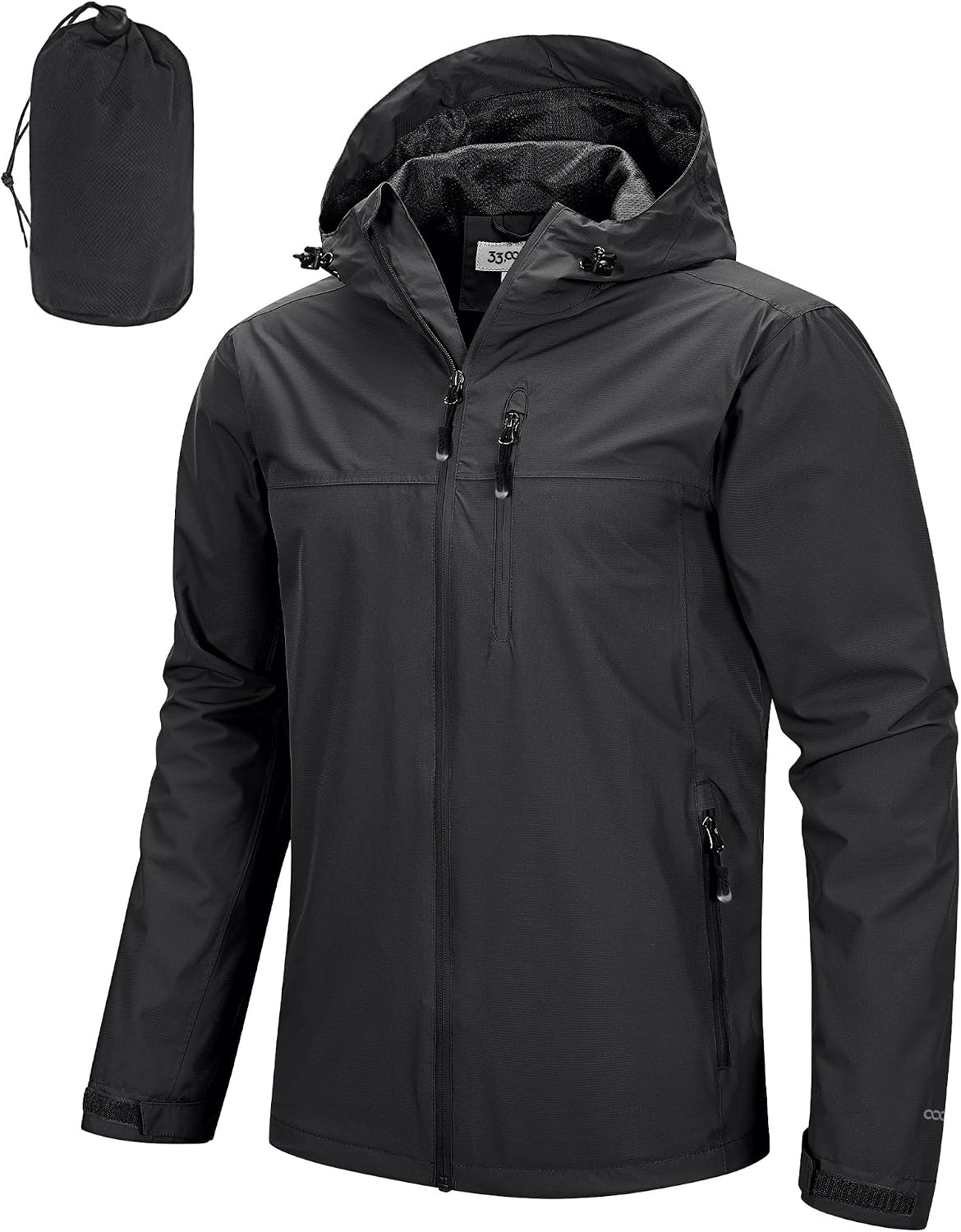
33,000ft is an online-first outdoor brand built around one idea: put a usable waterproof shell within reach of anyone who needs one occasionally. The packable rain jacket is a coated polyester shell rated at 10000mm, with a mesh lining, underarm vents, zip pockets and a hood that adjusts. Those are the features of a jacket several tiers above its position.
The case for buying it is situational rather than aspirational. If you commute by bike, hike occasionally, travel to places where rain is likely, or want a shell in the car that you never think about until you need it, this jacket does that job without a second thought. It packs very small, it is light, and it is comfortable enough over a t-shirt for a walk in the rain.
The limits are the limits of coated fabric at this level. Breathability is modest, so hard climbs will feel clammy, and the DWR finish needs refreshing sooner than on a laminated shell. The cut is roomy rather than shaped, which is forgiving for layering but less sharp in appearance. And as with any budget shell, the hood and cuff hardware are simpler and will not last as long as the hardware on a technical jacket.
None of that is a reason to avoid it. It is a reason to buy it for the right job: a spare shell, a travel jacket, a first rain jacket for a teenager, or a backup in the bag. For that role it is the best value in this guide.
Signature jacket: Packable Rain Jacket with Hood
Waterproofing: Coated polyester, 10000mm rating
Features: Underarm vents, mesh lining, zip pockets
Fit note: Roomy, layers easily
Best for: Spare shell, travel, occasional hiking
How We Chose These Five Brands
Rain shells are the most over-claimed category in outdoor clothing, so the filter was about systems rather than slogans. Five brands, five different construction approaches, each with a jacket you can check on Amazon today.
Seam construction checked. A shell with unsealed seams leaks regardless of its rating. Every jacket here uses sealed or taped construction appropriate to its level.
Real packability compared. A jacket that only folds small in a marketing photograph is not packable. Packed volume was assessed against the role each brand is aiming at.
Hood behaviour considered. A hood that blows back in wind is worse than no hood. Adjustability and shape were part of the assessment, not an afterthought.
Current availability. Every jacket linked is listed and purchasable today, with a size chart you can read before ordering.
Why Trust Pliizy
No brand paid to appear in this guide and none of them reviewed it before publication. The ordering reflects how many readers each jacket is likely to serve well, which is why the balanced everyday shell leads rather than the most technical one.
All links here are Amazon affiliate links. If you buy through one, this site may earn a commission at no additional cost to you. That funding does not change the recommendations, and it is why the site does not need display advertising.
We leave prices and star ratings out deliberately. A rain jacket listing changes price with every promotion cycle, and review counts move daily. What stays stable is the construction: the waterproofing system, the seam treatment, the packed volume and the cut. Those are what this guide compares, and they are the things worth knowing before you open a listing.
How to Choose a Rain Jacket Brand
Five brands is a short list, and four questions will usually reduce it to one.
Decide how often you will actually wear it
A jacket worn twice a week for a commute is a different product from one worn twice a year in a suitcase. Daily wear points to Columbia or Eddie Bauer, where comfort and durability matter more than grams. Occasional wear points to 33,000ft, where the jacket lives in a bag and the priority is packed size.
Check the waterproof rating against your weather
A 10000mm shell handles steady rain and is entirely adequate for city and trail walking. Sustained, wind-driven rain over hours wants a laminated shell with a higher rating and fully taped seams. If you do not know your rating, the honest answer is that you probably need the everyday level, not the expedition level.
Separate waterproof from breathable
These are different properties and marketing often blurs them. A coated shell can be fully waterproof and still leave you clammy on a climb; a laminated shell breathes better and costs more. If you generate a lot of heat uphill, prioritise breathability and vents. If you mostly walk in the rain on flat ground, waterproofing is the property that matters.
Look at the seams before the fabric
Seams are where shells fail. Fully taped or sealed seams are the difference between a jacket that keeps rain out for an hour and one that keeps it out for a day. This is the single specification worth checking on any listing, and it is often buried below the marketing copy.
Plan for the layer underneath
A rain shell is sized to fit over something. If you will wear a fleece or a puffy underneath, size for that layer and check the shoulder and sleeve length, not just the chest. A shell that fits perfectly over a t-shirt will be unwearable over a midlayer in cold rain, which is exactly when you need it most.
Frequently Asked Questions
The Short Version
For one jacket that covers commuting, travel and weekend trails, Columbia’s Watertight II is the safest answer. If the jacket has to look right in a city, the North Face Antora is the one you will actually wear. If you count grams and want a shell that vanishes into a pack, Marmot’s Precip Eco is the technical choice. If you want quiet, structured quality without a loud logo, Eddie Bauer’s Rainfoil delivers it. And if you need a shell that lives in a bag for the day it rains, 33,000ft does that job for less.
Whichever you pick, check the seams, size it for the layer you will actually wear underneath, and treat the DWR finish as maintenance. A shell that is re-proofed once a season lasts years longer than one that is thrown away the first time it wets out.


